49767891_10216534268542384_7530440385701609472_n

The unsung heroines : A tribute to Grandmas

STRANDOMS: the stray and random thoughts

January 6, 2019

Prof. S. Ramkumar

Education

The unsung heroines : A tribute to Grandmas

Grandparents are irreplaceable sources of love in our life. The merry-life of grandchildren are enriched in the presence of grandparents. They are often the soul mates to whom children share all secrets and apprehensions, including how strict and tough their parents are, how silly sometimes friends are and how cruel teachers are in asking them to do homework and learn! Children have favourites among the grandparents. In an age of technology dominated by short settlements in different regions of the world for work, and nucleated families, the roles of Grandparents are changing. This is an attempt to recollect few incidences with my grandma, and I write it as a tribute to all grandparents.

“Granny expresses her approval of this attitude (of Swami) and then begged leave to start the story of Harischandra, who, just to be true to his word , lost his throne, wife, and child, and got them all back in the end. She was half-way through it when Swaminathan’s rhythmic snoring punctuated her narration, and she lay down to sleep.”

(Swami and Friends: R. K. Narayanan)
Grandma narrated stories which were short, expressive and emotional, and it’s a great feel of hearing the stories lying beside. The story-telling by my grandmother often took me to a world of imagination from where it took time to get back to the real world. I remember how she told on Krishna going to Hastinapaura to appeal for peace with Duryodhana on behalf of Pandavas, after their 12 years of exile in the Forest and a 13 nth year of incognito. He was to ask the Kingdom for Pandavas! Duryodhana wanted to show his pride, power and ego and wanted to disparage Krishna, in spite of his father and other Gurus advising him not to do so. Duryodhana instructed his court members to sit in their chairs and not stand up as respect when Krishna arrives in the Court. They all sat firm to their chairs. The reaching of Krishna was indicated through the Panchaganyam (the conch) which was blown on his way, in the chariot. The kings and ministers and Duryodhana’s brothers started shivering since their chairs shuddered on the sound of the Panchajanyam, and they started to fall from their seats! What a picture she has drawn on a nine year old and stimulated the art of imagination. The dramatic, exaggerated version had no physical gestures – all were through the gentle voice changes which brought a movie in front of me.

Parents are our ideals.. However children feel they are strict with many schedules (of course aimed at the goodness of children!). At an young age the only person who could overrule my father’s decisions on my freedom was my Grandma. She tried her veto power mainly in my interest for playing (often at the cost of the studies!) and lying idle hearing her stories. The compliments of grandma on our achievements (and non-achieving) are so heart warming.

Remember once my maths teacher, Joseph sir (an old wise man) who came home occasionally to teach me maths , taught multiplication table. One day he asked to recollect the tables and tell him which he taught several times. I could easily say the multiplication tables of one to 12. Tables from 12 to16 required some more efforts from me which I didn’t put in, especially my Grandma being around. He scolded and I started to cry loudly (if it was my parents they wouldn’t mind though). Grandma came as an Angel from inside and told the teacher “your teaching is enough”! Joseph sir couldn’t convince her in any way. My father at that time a Professor of Education came to know of it in the evening when he returned from the College. He talked to his mother and requested her not to intervene in teaching. However she refused to hear him saying “any teaching which makes the child cry” is not real teaching! I was so happy when she reminded my father on how he has studied without getting any scolding or slaps. He had answers but was difficult to explain in front of me!

When I was eight I was to write the Sainik School exam. Grandma told my father that it’s not a good idea since I will be moved away from family to a hostel at a young age. Father had his reasons which were fair and asked me to write that. Though he was serious on me attempting it, grandma had a personal session with me on why that life would be difficult. Anything for her! I made sure I didn’t get through the test! The attitude of taking certain things lightly in life might have been planted in me by her.

Grandma used to explain about the relatives, relations and was open in her versions of who are good and who are not so. They were straight talks- simple and loving – and offered unfiltered joy. I used to enjoy helping her crush the betel leaves (vettila) and areca nuts (paakku) in the small stone, kept for that, which was her most relaxing time.

A grandma’s presence in a home moulds the children, without her/his knowing and, they are often least credited to this personality formation. Grandmas are always a joy – whether we are sad, angry or happy they “talk to” and “feel you”. They hear to all our petty complains and silly stories at home and school, and join us. Grandma to grandchild is a special bond.

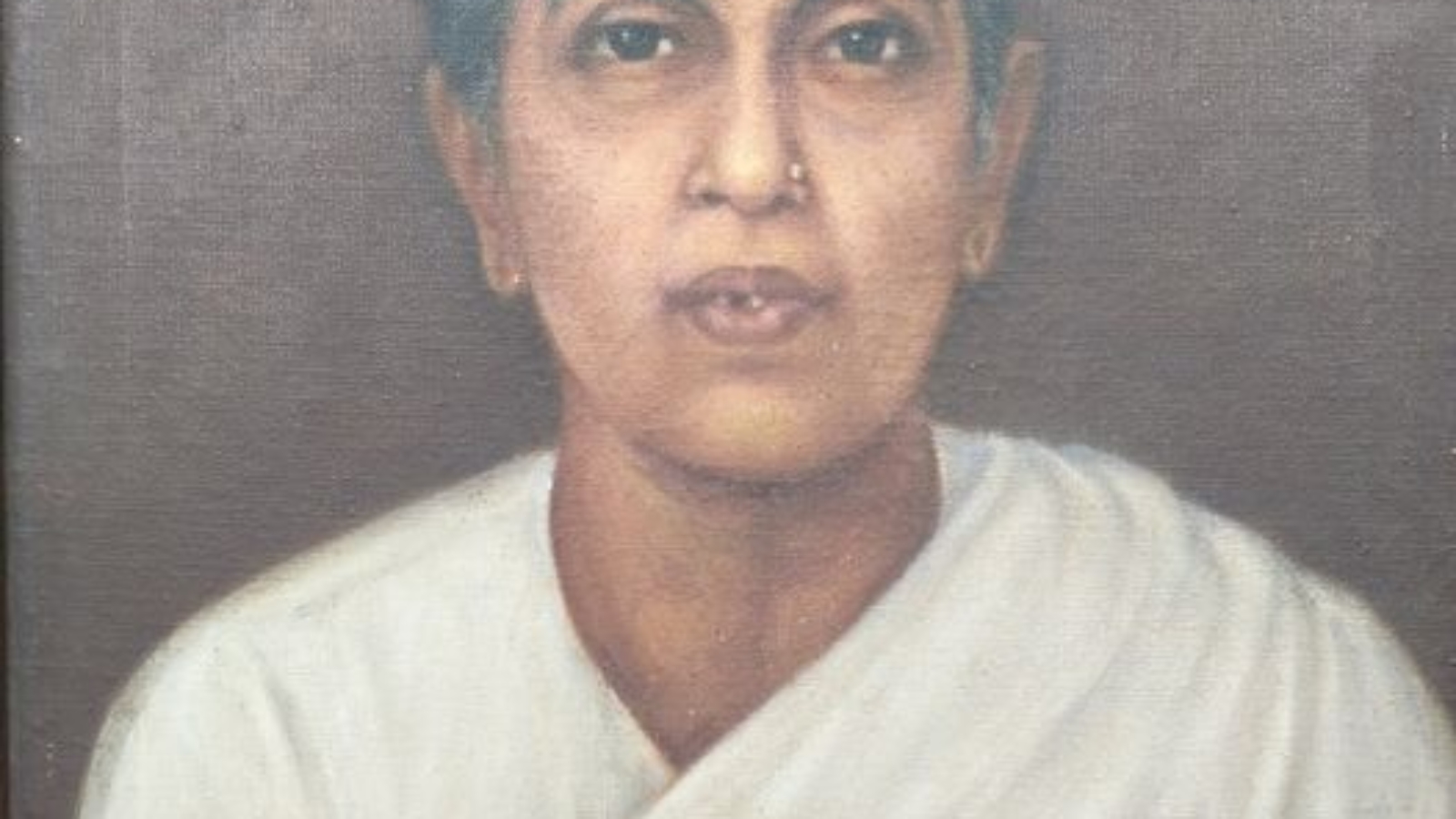
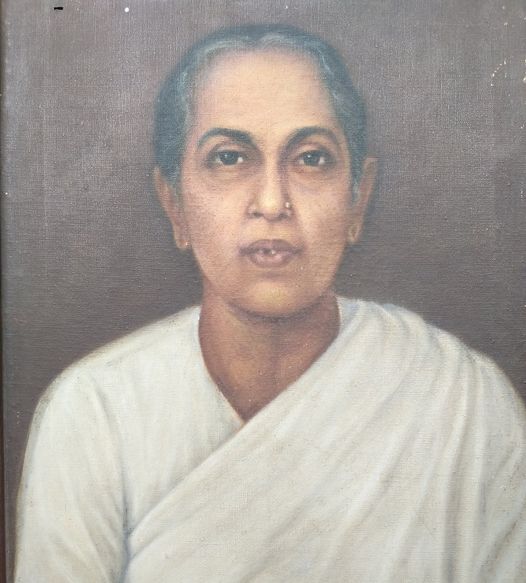
Though short, I cherish the best moments of my childhood and now realise the depth of impact it had in me. Above all I loved her nose-jewel stud, mukuthi (the red stones in gold nose stud). She had the aristocracy of maturity, unbounded love, a simple and straight heart.

Grandmas – the invisible evangelists who shape us!

Share

lauren-lulu-taylor-vppMdk_GMo4-unsplash

THE GLOW OF GOODNESS

STRANDOMS: the stray and random thoughts

June 28, 2018

Prof. S. Ramkumar

Life, Lifestyle

THE GLOW OF GOODNESS

Life is run by the never ending strands of Goodness, much of which we are not aware of as we enjoy and sail through them ; some of which we are made aware when it glows occasionally making them visible. These “glows” apparently ensures humanity - the hope and happiness of spreading it further. This is an excerpt from a situation of a surgery focusing on the surgeon and the Glow of Goodness. Ultimately, we all thrive on this energy of Goodness - of some known and many unknown.

As my daughter (who is a human(e) doctor by default and nature, and a film story/script writer by passion) coerced me into the much postponed surgery for me, I was learning the “unknown’s indices” and uncertainties of life as a patient. The best thing she did was to identify the surgeon whom she had great regards for. From the first meeting in which the surgeon unambiguously informed after a check up that I needed to undergo an intervention operation and set the target days between as 7 to 10. I haven’t been able to study me as a patient- but I am considered as a worrisome one in that role.

In a time in which we have many doctors and surgeons (especially in urban areas), and options of corporate hospitals to primary health centers, I was impressed by the professional approach of this surgeon- who was more than willing to tolerate my every doubt (which never ended!). I could feel he could have been none other than a surgeon. Professional, simple, straight, energetic, limited but precise and clear in this thoughts and words and above all confidence in what he was doing.

There was sequence of events- pre and post operation- which included regular caring visits every day, listening and reassuring, holding on to my hand in the Operation theatre just before the procedure and assuring that “just relax sir, we will take care of you” and similar mind relaxing gestures which helped me to face the test of time. With a surgeon like him around, I felt comfortably positioned as somebody who is genuinely cared for.

To cut short memories and to the theme of the topic.

As he said after a week after the operation that I can leave, the Hospital did not agree to take the fees from me. My wife who was with me through all nights was surprised. The management said that the Surgeon has made it clear that he was doing the surgery “free” for me. When he himself is not collecting his genuine fee the Management felt that they should not get anything from me (especially so since my daughter worked there for an year and a half and was liked so much there). I was firm that it wasn’t fair. It wasn’t after all just the bill that needed to be paid with “money” but the care, compassion and concern of many others that needed to be acknowledged by me.

I decided to ask the Surgeon on the day of discharge while he gave instructions to me on post operative care , “Doctor, why don’t you please accept the surgeon’s fee, for all the efforts you have been taking?. Before I could complete, he interrupted “No, sir, the top-up you have give me and family has still more space to be charged”. It didn’t click me. As I tried convincing , he stopped me with a smile “still charge is remaining- hope you understand!”

My daughter reminded me of the incident that happened two years back. Her senior colleague – an efficient and respected lady gynaecologist needed a help. Two injured young stray dogs were hurt and abandoned at the gate of their home and were suffering. Their cries were upsetting not only her but also her young daughters. She in some place felt responsible for it and helpless at the same time. They were finding difficulty in identifying somebody who could save, treat and take these dogs away to a secure place. Her concern was genuine. They were constantly disturbed by the painful cries and grumblings of these poor creatures. After talking to her I understood her concern and worry for the animals (and that made me realize how compassionate and good they were!). I tried all official mechanisms to take the animals away from their home for treatment but it was difficult (which I knew!). Finally, I asked one of my students, a good veterinarian, who is a Faculty now for help and he whole heartedly obliged. With much efforts he through an NGO did took the dogs away and treated them.

I had forgotten this incident.

The Surgeon again repeated “ The two nights of disturbed sleep and worry for the dogs are unexplainable. You went out of the way to help us”. The lady gynecologist was his wife. He continued “what I am doing is my duty of sharing knowledge of medicine and surgery”.

I was too awestruck to respond.

It wasn’t the money, but the Glow of Goodness that comes out of the blue that surprises us and spreads a sweet joy of life.

It’s amazing how we could be carriers of this glow, every moment of our life. And how my student, the lady gynecologist, the surgeon- Dr. P.V.Srinivasan, the sisters of Cluny and my daughter could form a loop of this glow that gave this insight to me!

element5-digital-OyCl7Y4y0Bk-unsplash (1)

The Art of Arrogance

STRANDOMS: the stray and random thoughts

August 16, 2017

Prof. S. Ramkumar

Education

The Art of Arrogance

One of the examples that I use to quote in a lecture of communication is of how a same signal bears different meaning in two countries. For eg. In UK (or elsewhere as applicable) a car or vehicle approaching opposite to your vehicle, if blinks its headlamps, on a highway it would mean courtesy, which may be read as “I am stopping and waiting, you may please go first”. In India the same blinking of headlamps would read “I am advancing (or overtaking), mind you, keep your vehicle to the safe side till I go first”. This is to summarize the attitude of a driver, which is more important than the mechanical skills of driving that defines a “driver” and hence driving.

The “Wheel”, one of the greatest inventions of human history, has developed over civilization timelines to design the diverse vehicles of the present day. Roads are the lifelines of development. However the use of these lifelines depends on “humans”, whose attitude decides how “order” is created in the new social situation ie. “the traffic”.

  1. The smirk of the bicycle rider as he looks back and wanes from a scene, narrowly escaping the scathe of a near-to-hit accident with your vehicle
  2. The awkward posture of the day – phone squeezed between the ear and shoulder, with side-bend neck during the two wheeler drive.
  3. Vehicles that buzz through (overtake) on four sides of your vehicle (not over!)
  4. Parking vehicles on the road, rather than on the sides, and talking to friends.
  5. Parking – be it a two wheeler or four wheeler- with least consideration for the vehicles parked adjacent/near by, making it difficult for another fellow driver to move his/her vehicle form the parked lot.
  6. Honking from behind (or anywhere else) pushing the driver to advance the car or vehicle genuinely waiting for a signal: the horn-shove.
  7. Rushing with that extra speed, desperately to cross the traffic signal, while amber giving way to red.

These are some examples of our daily life, forget the angry looks and enmity faces often we come across on fellow drivers. The story of our traffic on common roads is that of desperateness and quite often, arrogance, as examples listed above.

We have various reasons to justify the type of driving on the roads- but none justifies the danger it can often attribute to the driver, fellow drivers or pedestrians.

Driving on the roads is a social learning, and as like many phenomena depends on the attitude. We have almost all best brands of cars, bikes or bicycles of the world in our roads. Roads too are improving (though one could ideally think of still better). If driving has to be secure, safe and peaceful then attitude needs a change, among anyone who drives.

In places like Europe, US or UK, driving is considered as a pleasure, or a stress-reliever. In addition to the cars and roads it’s the attitude of the drivers that makes driving a pleasure! There is more a mood of competition and unfriendliness in our system of driving compared to the largely cooperative and friendly attitude of drivers in some countries. The relaxed, satisfied, friendly, confident and helpful faces behind the steering is so pleasing compared to the grim, unfriendly, angry, serious, suspicious and threatening faces!

Recently while in IIT Madras, viewing a ”driverless” car project in an innovation experiment, I was amazed to learn that there could be as much as 60 emotions that can flash across a driver’s face depending on the various factors and scenarios one encounters during driving. This was being explored there , to study reactions that could help maneuver the driving in the driverless project. These emotions are attempted to be plotted to decide the reaction of the movement of the car without the driver.

Essentially, it’s the attitude of arrogance that persists and raises rages on roads. Again, driving is not the mechanical art of holding the steering and controlling a vehicle, it’s a big responsible social activity! Respecting fellow drivers, passengers and helping and guiding each other. There is a soft skill art, which is often ignored in driving, on how especially the emotional balance and respect for others can be maintained.

Well this attitude again could be built up as a child in homes and class rooms, but, only if, the child sees the same that is taught in the class is seen on roads. If not (s) he learns the opposite, theory for class rooms and arrogance for practice, which they see around.

The soft skill training in driving especially driving etiquettes and mindset of respecting and considering the fellow drivers has to be an inevitable part of the formal training.

Distracted driving, especially with drivers using cell phones in two-wheeler and other vehicles has to be dealt with caution. Often, this is casually done resulting in loss of innocent lives! An alarming fact that is added new to the list is the death due to the accidents caused by careless crossing of roads (looking at cell phones). Talking and texting are dangerous on roads: talking on the phone distracts us but texting is still more dangerous since the user can’t or doesn’t see the path in front. It’s important that “Cell phone civics” is added in drivers training to ensure the health and life of drivers as well as others.

If only, we could swap the skills of acrobats and arrogance with tolerance, respect and give-way-to-others attitude to fellow drivers, driving will be safe, peaceful and an experience to look forward to. It’s especially so in the present times since people spend more time on roads , travelling and there is an evolving social system called “traffic jams”.

Share

ben-white-4K2lIP0zc_k-unsplash

Stressed with the unexpected? the art of transforming dissonance to consonance!

STRANDOMS: the stray and random thoughts

February 5, 2022

Prof. S. Ramkumar

Life, Lifestyle

Stressed with the unexpected? the art of transforming dissonance to consonance!

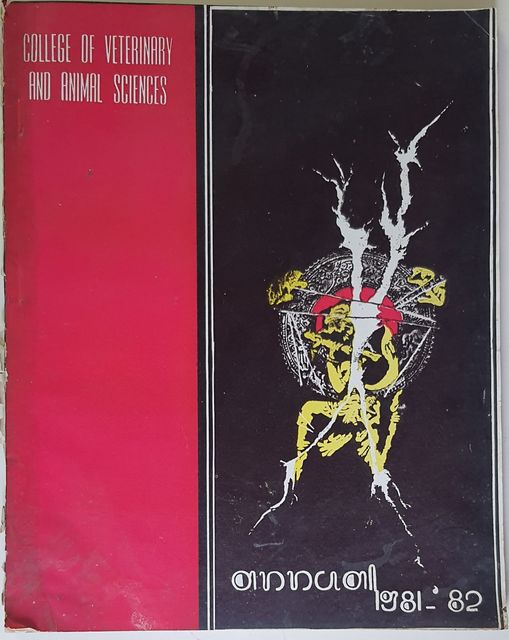
(The image is the cover page of the College Magazine 1981-82 for which I was the Editor. The art work was done by Dr. Chandran K, 1981 batch student, later who worked as a dedicated veterinarian who is an amazing artist - no digital technologies! I thought this will be a message that can tell us "we break, to unite")

We often meet the unexpected “good” and “bad” in life. It’s usually the bad that gives us stress of hurt and sadness – the bad which we never expected! “WE” is a broad term – it’s a prism which refracts beams including kids, children, teen, youth, young, old.., at any point of time. We grow with (or supposedly have to grow with) dealing with stress as we move up the ladder of age, but the ladder has new surprises in store as we climb up (or down!) the age. We have more diverse and new roles in family and society, and hence new challenges and stress.

Stress from the unexpected bad can drive us to pessimism and doubt.

In a general sense how we take up the situations depend on the nature and type of “unexpectedness” (unexpected events and situations, in general not good happenings in life), and varies with the age and the realistic maturity we possess for the age.

Accidents, diseases, death, deceits…all these “bad” when happens unexpected (which often are, as I started this article!), it hurts and upsets us. The relationships if closer, we feel the blind end which can give us shock, confusion, guilt and helplessness and a feeling of let down by Life.

This is the start of dissonance (conflict) within us which is understandably human, for a temporary period for emotional resurgence. It is a learning phase of life -to cope with the unexpected and move ahead. In short this is what education has to mentor us for. We get expertise in knowledge domains in arts science… for what? Jobs, security, relationships…Fine! But then all these have domains beyond the Knowledge of Expertise; in fact success of life or dealing with unexpectedness is usually only by Knowledge beyond domains of expertise.

The emotional balance is built on fabric of relationships, which we need to strengthen to overcome the unexpectedness. It’s the wisdom of connectedness. Sharing and caring helps to ease them out. “Overcoming” the unexpectedness is a reality and a certainty of life which we need to learn and teach. This is the start of Consonance.

Accepting the unexpectedness, and realistically facing the “bad” is the first step to conflict resolution. This relieves us, and help us to see the faint light at the end of the otherwise dark path. Believe we are in this world capable of doing this. Clarity of mind during the turbulent times makes us strong to move ahead to deal with the unexpectedness, rather than succumbing to that!

Offer help to others, wherever you feel you can be of help in holding them to override the unexpectedness. This will help people to recover from the temporary phase of doubt and pessimism. Family, friends, people from work places, spirituality (irrespective of religions) all help us in this.

If the unexpected situation is a persistent one, intentionally created by humans, purposefully to hurt or harm, fight it or come out of the situation and lead your life, for, ultimately we seek the path of happiness in life; existing with dignity in a fearless atmosphere among peaceful relationships, is what ultimately matters. Within these we can always try finding our way opening in the front.

Share “your breaths of life” (words or deeds) for others to breathe back to life.

Life takes us through the path of unexpected falls, but as a principle of life, we fall to rise, from unfulfilled dreams, to full fillable alternates.

Consonance is blessed with every person, to melt the misery of dissonance;

it’s with us, never part with it in times of worry.

Share

name_-gravity-_AdUs32i0jc-unsplash

Listening : the lifeline of harmony

STRANDOMS: the stray and random thoughts

October 18, 2017

Prof. S. Ramkumar

Education

Listening : the lifeline of harmony

Heard Melodies Are Sweet, but Those Unheard Are Sweeter” Therefore, ye soft pipes, play on;…. “Ode on a Grecian Urn” : Keats. The lines reflecting that the power of thought, imagination and anticipation is often greater than the act itself. Are we staking these powers to continuous use of smart phones ?

She doesn’t listen to what I am saying!

My father doesn’t understand why I want to do something!

My mother doesn’t listen to what I am saying!

Any time you see my son, he is on the mobile phone!

He is not listening in the class, but hooked to the phone!

She is playing a lot with phone!

She doesn’t wear what I am telling.

He doesn’t hear what I am talking; he is simply on the phone !

Some examples of comments, which reverberates, often, in unexpected consequences. Some of these comments expressed out are heard, some unheard, some are listened, some are not. Many of these go unexpressed too. But many can create issues of stress if not properly understood!

This article is an attempt to understand “listening” to others (as evidently stray thoughts pulled randomly) so as to understand one perspective of “listening” in the present day. It is an inter generational, technology perspective. This may help in better self-realization, for a learned listening!

History has been a timeline of “events”. Civilizations, trade, wars, explorations, discoveries, inventions etc are used individually or clustered as points of reference to develop, understand and explain events for the periods for which we seek insights into. To quote an example “ science” has been a tool of change in human history (from ancient Plato through the new scientific revolution – attributed to Galileo since 1630s), or later “technology” is an eventful history maker. (they are though intrinsically connected).

The timeline (or era) of history, with the advent of accelerated inventions of technologies in society in the last two decades, has shorter time-spans of eventful happenings that makes ripples of faster change, compared to the slow happenings arranged over a longer period of years in the previous centuries. One of the simple ways to look at it (especially from the thought of the topic of present discussion- listening) is to place people in Generation boxes (Gen Box) by virtue of the year of birth.

“Information” “Instant Connectivity & information”

Newspaper Gen Radio Gen TV Gen Computer Gen Internet Gen Mobile Gen Google Gen Android Gen Whats app Gen

(One can modify this in any manner of logic and history!).

I designed this classification for the vital component of “ Information” that runs through all these generations, and as we start from Computer Gen we find that we are travelling beyond information to “instant connectivity”. One way of understanding “listening” is first to place ourselves in an appropriate gen box. Then look into the Gen Box of the listener.

The Gen box is a representation of the realm of reality on which our behaviours are usually founded upon. It is natural and fair. People are often comfortable with others in the same Gen box, from a perspective of technology-based approach (though issues in communication happen at intra Gen box level too) than with gen boxes farther away from them. It’s important to accept and understand the “realms of realities” in other Gen boxes, for continued “basic commonness” for meaningful communication. Listening is the primary step in this acceptance.

For eg. a TV Gen mother talking to a post-google gen daughter. The behaviors of these two are naturally influenced by the context, values, habit, ethics (and many more) they have evolved through. The main point is that they vary a lot. Listening (the predominant function of successful communication) for one may not be the behaviour expected from the other. The perception that we possess is a product of many factors like the “gene Kit” we are handed over and the environment which nurtures us. To make a complex phenomenon simple, let us call it “Identity” of an individual.

Identity has more to with “becoming” , than with “being”, and it’s a process that starts right from birth. The mirror that our environment holds up to us determines who we become (Paul Verhaeghe, 2014: What about me?).

As we advance, two fundamental tendencies would seem to be typical of every living being: we want to be part of the greater whole, and at the same time we long for independence.

Revisiting the earlier example of the TV-mother and Google-daughter, now, in addition to the Gen Box, it is growing to the interaction of two identities. It is in this situation listening warrants more care from the communicators. The speed of the technological changes (and hence growing diversity in gadgets), identity (in terms of “brands” over a growing market economy), communication (that attempts at connectivity at a physical level across the globe: now its only virtual!) all have created a new “global civilization”. These were changing over a period of time, to the present neo-liberal era, in which consumer is the key. The present positioning of all Gen boxes are embedded within the global civilization – like it or not!

For eg. From “product” to “product-of-class (brand)” – may it be clothes, phones, bikes – the new Gen refers to the “brand” of a product rather than a product. It’s not the material but the brand that is message of people in the present day market- based society, especially the e-marketing with Amazon, Flipkart and so on.

How do two Gen boxes synchronize for a happy living? By Change.

It is not simply a question of making the “other” change; the painful truth is that we, too, will have to change ((Paul Verhaghe, 2014). Thomas Friedman, 2016 (Thank you for being late) also states the significance of changing or adapting to new technologies (in terms of Identity has more to with becoming) so as to be on Board of reality of the present day. Called as the Big Shift, they argue, is that we are moving from a long period of history in which “stocks” were the measure of wealth and the driver of growth – to a world in which the most relevant source of comparative advantage will be how rich and numerous are the “flows” passing through your country or community and how well trained your citizen-workers are to take advantage of them. It calls us to learn faster by working together and to pull out of ourselves more of our true potential, both individually and collectively. New Gen has the advantage of being born into this phenomenon. Others have to reinvent their skills and mindset to adapt for a “common minimum understanding”.

Listening (the key tool in communication) happens across generation boxes. Listening happening within a Gen box is usually uneventful, since the equations of the day generally bear similar meaning for all. While listening to the connected world around, find time to disconnect-to-connect with nearer, or learn to accept a new pattern of listening.

Accept intergenerational box differences and change wherever possible. We can’t exclusively blame the new gen for the “Hi Speed travel in the Information Motorway”, which science and technology offers, and we not coping with them. Ensuring values (listening rather than commanding plays a vital role) could strengthen the order and life, whichever generations we belong to.

“I indulged myself one evening, after a seminar in a dark conference room in a Mumbai hotel, to sit quietly in the roof-top restaurant for dinner, and watch the sunset fading over the Arabian sea. A young man and women sat on the table next to mine. Then another woman joined them. *Thoreau’s three chairs. I thought. Except that they had the Arabian Sea and a warm sunset outside, instead of Walden Pond and snow. The waiter lit a candle on their table, brought champagne in a bucket, and poured three flutes for them. They raised their champagne flutes , looked up from their smart phones for a few seconds at each other, said “cheers”, and quickly returned to their smart phones to find out what was happening in the world elsewhere. They didn’t seem interested in what was happening in each other’s hearts or minds.

Arun Maira, 2017.

Listening for well being: conversations with people not like us. P 103.

*Thoreaus”s three chairs: Henry David Thoreau, the American Philosopher wrote in Walden (1845) “I had three chairs in my house; one for solitude, two for friendship and three for society.” He could sit in one chair and watch the autumn outside, geese on the pond and the flurry of snow. He could listen to his own thoughts detached from others, while seasons changed.

I was pleasantly surprised when one of the Faculty in a college recently wrote interesting verses, stating that the person was in solitude and inventing the fineness of nature during that time: Thoreau’s first chair ! Many of us use the chairs; if not we need to! Search these chairs: find the Wordsworth, Bharatiyaar, Gandhiji, Mother Teresa, Changampuzha, Marie Curie, Nelson Mandela… and so many. Transform to them (to their mindsets). We need to place the chair for sometime so that we can internally listen to self, friends, family and society. Listening is life.

Listening is a purposeful thought process, Settings affect our thoughts. Eg. Silence improves our thoughts. It might be quite difficult to aspire for “thoughts” (and hence listening ) amidst the “noise” of the TV soap opera or sounds of bashing big beat songs (not the sound of music!).

In Reclaiming Conversation: The Power of Talk in a Digital Age, (2015), Prof. Sherry Turkle, at MIT argues that just as Thoreau needed these symbolic chairs in his cabin near Walden Pond, we need a similar social structure to communicate effectively. But cell phones are damaging our capacity for engaged conversation, she suggests, and thus our capacity for friendship and social connection.

For eg., Turkle argues that we avoid solitude, Thoreau’s first chair, by constantly checking our cell phones, despite the fact that we need this solitude to truly know ourselves. With cell phones, “we turn to other people to support our sense of self,” robbing us of the self-knowledge necessary for rich conversations! She claims that in the end, we are sacrificing conversation for connection!

Respect the Gen boxes, do not blame the Gen boxes, Learn to live with different Gen boxes, understand that “Identity” undergoes changes with time and technology, from utility to brand, realize conversations are important in the age of connectivity , disconnect and reconnect, have the three Thoreau’s chairs… Its listening, and an intergenerational technology perspective for a new order of harmony for the present day.

Did you listen today?

Share

happy-dad-throws-baby-sunset

Find the father !

STRANDOMS: the stray and random thoughts

March 29,2020

Prof. S. Ramkumar

Education

Find the father !

One of the most difficult things to attempt in life is to jot on the thoughts of mother and father after our mid-age. Rather than nouns, they are un-explainable adjectives of infinite care and love, impossible to recreate in full with available letters. However, I thought to try few lines on the universality of the concept of “father”; though it varies subjectively with very personal, fond, glum and glow moments. I preferred to deduce the thoughts of a father since I too am living that role! Those who have their fathers around, live up to them. Others can understand that the father lives with them. Our thoughts and deeds to a great extend are his contributions. And he guides you for the good.

My father used to tell me how his father shared with him that “fatherhood” is something that needs to be experienced. Like a river, wherein water flows only towards one side, love and affection which flows from father(parents!) to children can be experienced, when the children turns to be parents, and it goes on. This realization naturally takes time. Though we feel we love the parents, the incessant, unlimited and selfless stream of love to children is the experience of parenthood that can be given over only to our children.

As a child I remember my father was very busy with his job (as a teacher, professor and Dean/Director in colleges and Universities) and social commitments, but has always filled presence at home even if not physically. Similarly I have/had the opportunity of knowing the parents of my students for over three decades now. The pulse and feelings of fathers (parents) are universal. They may have a job or jobless; rich or poor; black or white; had schooling or not – whatever they maybe, universally for their children they are amazingly abound with “guided love”- the guide in them sometimes makes the child difficult to accept the father when he turns tough!

I have been, as a child seeing a serious father. He was not unfriendly and had been like many fathers of that generation where-in parents were parents (nothing less or more!). In case I needed anything- to play, go out, buy those extra crackers for Diwali, go for a movie (very rarely) I had to reach him through my mother.

In the present day “father generation” wherein I too belong, parents aspire to be considered as friends by their children. Nothing bad in that though. Parents (especially father) has a role of making children realize the “value” of anything by keeping it short of abundance! The beauty of life is the enjoyment of satisfaction with the limited. It teaches the value of non-materialistic, realistic way of living in a society with “limited taking” and “unlimited giving” to the world around us. The present day sees large number of parents unsatisfied with the facilities of luxury they can provide to their child.

Father (and mother) are the irreplaceable role models of a child at home, which further expands to a wider world of many. The conscious and subconscious learning as children, live through us, and is passed on to our children and others too!

We have different impressions (or smileys!) of father over the ages through which we grow; kid, child, in school and colleges. The impressions could be that he was loving, serious, tough, angry, happy, worried etc. towards us and many. The children grow to adults to explore that there is finally only one expression of a father that glows in their mind- the one of a “guided love”. As a child, teenager or youth I haven’t had the time to think or priority of thinking of the influence of father on me. Later, as like many, I understood the inimitable, filling and the omnipresent role of a father in every moment of life. That’s when we are seasoned to look into and understand the worth of fathering. When I look back, I realize that he has molded us along with many. He had a role of a caretaker to create a useful citizen for many, not for him alone!

The finest moments are those you can talk (or chat!) with your father, which usually happens when wisdom sets in. And try opening the memory treasure in the hold of the yesteryears. It will be interesting, educative and directional if we could plot instances of moments in life with father and reflect on why did he do or say so?

“Father” is a fantasy that a child can live up to as (s)he would love to. The values and beliefs that we hold on in life to a great extent are shaped by him (of course along with the mother!).

Share

aron-visuals-BXOXnQ26B7o-unsplash

Events or Time: they make us!

STRANDOMS: the stray and random thoughts

January 21, 2018

Prof. S. Ramkumar

Life

Events or Time: they make us!

We humans often blame “time” for the not-so- good happenings in our life, though time is a construct of threaded events already existing inbuilt. This is an epistemological enquiry.

Does time decides events or events decide time?

All events in life take place at a “time” and life is collection of these events. For eg. An accident on road happens at a time. We can think, rationally, that the accident could have been avoided provided the previous events – how we started a day on a morning, took a bath, talked over phone had tea, breakfast etc. If a fraction of a second delay or difference in timing was there in the previous events, that accident at that point of time would not have happened. But we do not know that an event/accident is waiting. Time sets or decides that event ? People remark “my time is not right”. We are familiar with the man made 24 hours of a day and night marked as am and pm. But the “time” we talk about is a combination of events, it is a construct of attributes that make the time.

Losing a job, not getting something we wanted, getting something better than what we expected, getting sick, straining relations, building relations which are usually marked by humans as achievement, recognition, appreciation, satisfaction (or their opposites) etc are events. On a different note the occurrence of events are sometimes viewed as “chance” founded upon randomness (different view of discussion). Whatever, events exist.

An year signifies human construct. A construct that tends us to believe that time is existing as dates, months and years and they move forward, which is fair to create an order and uniformity much needed for the humans to exist and coordinate connectivity between them.

But science and religions talk about time as a relative phenomenon. They view it as a process in which changes around (changes are events!), and in us, constructs “time” which is relative. The same hours of a clock seem to run slow when we are upset and worried, while it flies when we are happy and satisfied. Einstein’s famous contribution on relativity has helped us to learn this in an easier way. In a way we are same…things around us change and we say time is moving. Interestingly we must think of time as a localised phenomenon: every object of the Universe has its own time running, at a pace determined by the local gravitational field (Rovelli).

Every event has a time-linking and any time has an event-linking. Thinking in simpler terms the canvas of events of a life exists, unfolding around an individual. We do not move, that moves (we call it as change, which is ubiquitous). When it moves, we call it as time.

Does time decides events or events decide time?

Share

rodion-kutsaev-0VGG7cqTwCo-unsplash

Aladdin’s lamp for the 21st century: the same smartie phones

STRANDOMS: the stray and random thoughts

October 20, 2018

Prof. S. Ramkumar

Lifestyle, life

Aladdin’s lamp for the 21st century: the smartie phones

From 18th century Aladdin’s lamp to 21st century smart phones, the travel is from tale to technology. Interestingly, issues that the mobile phones raise in a society is myriad : with many among the world possessing this magic lamp which needs only ‘a’ touch to deliver wishes.

The advent of technology is rapid, revolutionary and unstoppable. As television made the first phase of entry into homes and institutions in India in the 1980s, it slowly started rewriting the potential of information and entertainment to be delivered at home. But it started as a medium of magnet that made family members huddle together to watch programmes. This binding between members slowly dispersed when programmes and soap operas multiplied and the choices of channels increased, taking to present day of cable TV and dish antennae relaying programmes around the globe TVs. As the remote of the TVs were competed for, many homes had more TVs walking in.

The computers in common educational institutions in India became popular in the mid-1990s. The fast pace of its penetration is evident by its ubiquitous presence in institutions and homes, with various updated models (based on memory and speed) and the laptops entering into the social system. Along with them mobile phones and the present smart phones/androids started entering homes. Compared to the PCs and TVs, smart phones turns to be more a personal possession among the members.

The iphone emerged in 2007, with Steve Job declaring at that time that in one device “we will have the world’s best media player, world’s best telephone and world’s best way to get to the web – all three in one”. This might look simple now, but a decade before it was a daring revolutionary techno advancement of bringing the world onto a palm size device. As Friedman (Thank you for being late, 2016) puts it: a whole group of companies emerged in 2007. Together these new companies and innovations have reshaped how people and machines communicate, create, collaborate and think”.

Technology creates tectonic tides on any social fabric, as it can connect people, events, practices, ideas, feelings, emotions and what not, within a short time. The magic lamp of this century- the smart phone – opens with abracadabra (the pass word) and a touch on the phone. There is no need of a ring which Aladdin had to rub on the lamp for a wish. As it delivers the desires at a personal level, great onus is with the people who use this Technology on Palm (ToP) which connects them to their wishes within a flash of a wink. Eric Beinhocker distinguishes the evolution of technologies as “physical technologies”- stones, tools, bullock-drawn ploughs, microchips and the “social technologies”- the rule of law, regulations etc. Both these co evolve. Cutting the discussion short, he suggests that “our physical technologies can get way ahead of the ability of our social technologies to manage them”.

The smart phone thus a physical technology with all its advantages, often creates social stresses too. The sweeping scenario is making the individuals of society to compete the speed of innovations to position their “identity”. We aren’t born with our identity – far from it- but we are born with a range of abilities and tendencies.

(Verhaghe, 2014: What about me? The struggle for identity in a market-based society). Identity is always a construct that derives from an interaction between the identity holder and the wider environment. Its core is formed by a coherent set of norms and values , the larger narrative of a particular culture. When they change, we too evolve in the direction of the new narrative with the new norms and values :Verhaghe, 2014. The smartphone is one of the latest technology that is making roles to reinvent themselves – as father, mother, teacher, brother, friend, teacher, son, daughter, sister, grandparents, …- to fit in new norms and values. This is what I mentioned earlier as “Technology creates tectonic tides on any social fabric, as it can connect people, events, practices, ideas, feelings, emotions and what not, within a short time.” This is a societal re fabrication exercise that’s on. Adapt to the changes, rather than worry on what we have come through and what is now. None can stop the techno tide ; we need to ride it.

A smartphone brings the world, confidence, entertainment and information to the user at his/her will. Aladdin couldn’t have wished more, since he did not know more than what he knew to ask for in the 18nth century. Today the information highway is loaded with traffic for any user irrespective of the age or education of the user. The options they can ask for through a touch on the phone is innumerable.

The wish, the desire and the need has to be carefully looked into before its touched for in the ‘ToP!’ Indiscriminate and innumerable options exists, the ability to discriminate and limit the wishes can change you to the Aladdin with the phone.

To end with an example:

We used to sit at home on the floor, legs crossed few years back and had home cooked food,

then we sat on a stool and ate on a small table or desk- home cooked food,

then we ate on a dining table – home cooked food,

then we ate on dining table the hotel food brought by parents,

then we all ate hotel food delivered by the hotel to home,

now we eat food delivered by the swiggy from hotels to our home, and

now we sink into a couch, eat the Swiggy food, with eyes shared between the TV and the ‘smartie’ in our hand.

The ‘smartie’ leads us to an inward world of personal, amidst the crowd. All need to manage the wishes and connect with the nearby to arrive at their own “Identity”.

Share

8

The Physics of Experience

LIFE

May 22, 2021

Prof. S. Ramkumar

The Physics of Experience

(This is in continuation to my short writing on “Theory of being you, with experiences”. What is written here will may have a meaning, only if that prologue is read first.
 
The stages or “quantum” of life usually can be understood only once we cross the stages; looking back is always to look forward! We are moved by waves of experiences, understandable as quanta when we look back, built always on relativity, predictable but uncertain. One of the many paradoxes of life!
 
Try picking up few quanta of experiences from your life! )

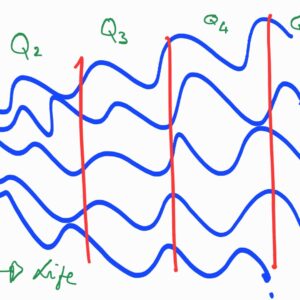
Picture 1:-

From birth onwards, we have lots of moments which precipitate to experience. They are not necessarily linear, as we may think at the time of the happening, but follow a wave pattern of particle physics, in which the moments of events/happenings sway us with influences (like the man in the pool – pic 2). Moreover, after years of experience, we can also realize that these wave-experiences, can be conceptualized as “sets of influences” called quanta. like Quanta1, Q2… In fact, if we think of our life there can be specific number of quanta experiences which should have ‘waved” us through life.

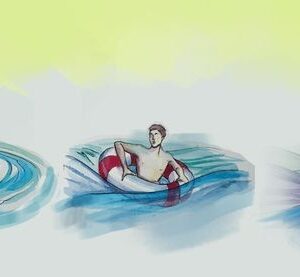
Picture 2:-

The man in the pool doesn’t swim. But the ripples of the waves decide on his movement and they take him to where he is now! It can be still, move him down or lift him up, or whichever spots the wave theories can calculate! This is like the particle movement explained in physics.

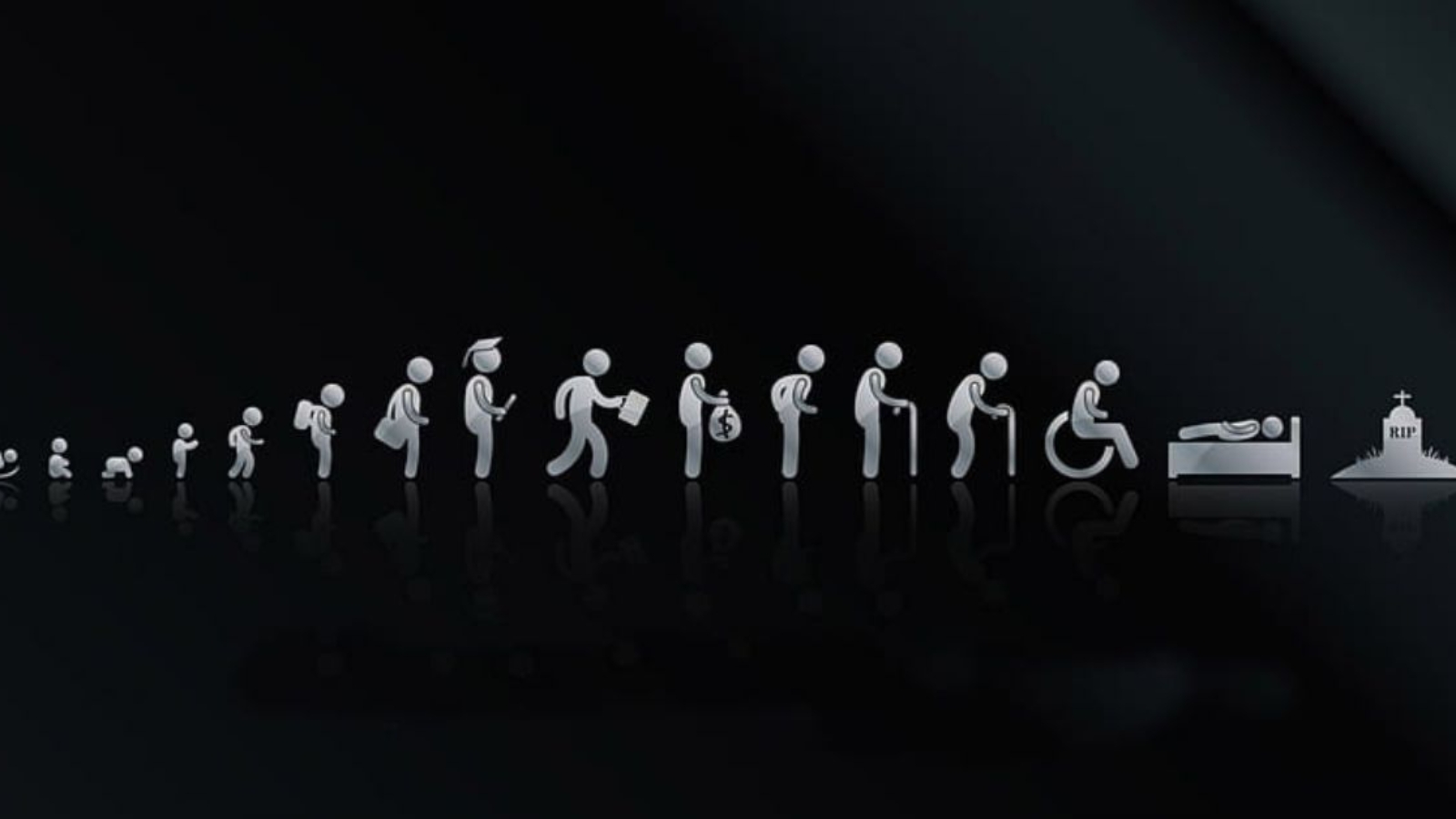
The stages of a person’s life viewed in the background of the canvas of the Universe, is something we may discover after the journey we travel for years. The simplest dimension of thinking an example is happenings in life on a timeline we remember; like 1st birthday of a child (remembered by parents), some events during school years, passing of +2 or pre degree, first day in a college, incidences in colleges, pass out from a college, marriage day, jobs, anniversaries, disasters, pandemic…
We usually think about our ‘experiences’ in a linear manner – attributing to the timeline based on many aspects as mentioned above; like experience – being in a family ( as a child, teenage, youth, with parents) school, college, through marriage, office, jobs we do…
It sometimes gives a fascination to realize these “stages” (as a child, with parents, teenage, youth, as parents) can be seen as collection of quantum experiences, that have made us what we are.
The series of momentary experiences we go through during a period of time is different, as we experience them at that time, and when we look back at these after years. In a simpler notion- what we experienced at ‘that’ time has a different feeling when revisited as our age advances. We have often a significant shaping of our personality as we grow.
After years we can find a pattern of ‘Set’ of experiences, rather than momentary experiences emerge. Looking back, we can see that momentary experiences consolidate to ‘quanta’ and any person can come with ‘quantum’ experiences which has moved a person forward. At the time of exposure to experience we would not have realized its relevance(or irrelevance), until we move forward in time, turn back and see them. ‘Moments add on to our age, not necessarily experience when we go through in real time.’
Assume a person in a lifebuoy in a pond or a swimming pool. If we create ripples in the pool, waves are formed; the waves move the person, up and down and forward (or backward) or in any swaying position. The “person” doesn’t swim to move – the wave moves him, but where he moves to and how swiftly, depends on the person’s position (or the lifebuoy), its speed (of up and down or straight) and position. The particles in wave function of physics has a similar pattern, ultimately the predictability of where the person is difficult with incessant wave motions swaying and crisscrossing and moving that. All are static, but moved by the ‘waves’.
A clarification on experience: (eg: in life or in work). Assume a person claiming to have, 30 years of experience in ‘X’ role. But simply existing as in that role of ‘X’ for 30 years doesn’t actually imply “experience”. The thoughts, actions, reflections and appropriate behaviour of continued modification is actually experience. These continued modifications usually can take the turns of quanta.

‘Experiencing Experience’ - the wave function of quantum physics

As mentioned earlier we generally think linear. However, we will be able to identify that appreciation of early experiences is as ‘quantum’, often in line with the wave function of particles explained in Physics. Interestingly the ‘wave theory’ of quantum mechanics discusses about ‘particles’ which don’t have well defined position and speed”. Instead they are represented by wave function. The contribution of great physicists like Laplace, Max Planck, Schrodinger, Heisenberg and Einstein (not described here, but worth interesting to read for a common man) and many more have critically contributed to various aspects of quantum physics and wave functions. One simple way of depicting this is that particles are having positions and speed and are in a wave motion. They move in a quantum manner throwing energy. (This oversimplified version is used for analogue to ‘experience’ of human beings). Assume a person similar to ‘particle’( in the pool of life), who has a ‘position’ and ‘speed’ (by mind), moved within waves, to realize later that our life has been a contribution of ‘quantum’ or a ‘ set of influences’, often unpredictable. The knowledge of particle theory doesn’t help us to predict future with certainty, which we can easily understand from our experiences. Unpredictability in life! Each quantum has ‘a set of influences’, rather than ‘specific moments’ – the specific moments reflect and build on itself evolving into set of influences (quantum). The happiness (and unhappiness) can be assessed within the quanta of experience a person can identify over years.
In ‘quantum experience’ we can note that experiences are reflected on its own and built upon the previous; experiences are a part of how, when and we were at that point of time and importantly they are ‘relative’ to many aspects (the context).
As ‘particles’, we (human beings) also have similar experience in the wave function. The “position and speed” of our movement (physically and mentally) are plotted “relative” to various factors like – in which stage of life are we, who are with us and without, what is the so called ‘ maturity’ we had or have, what did we had and we have now… the quality in many of these changes, decide the position of people in the waves, and hence the quantum that we perceive.
We experience ‘quantum’ not immediately when we go through momentary events of life (though it can also be debated), but after we pass these, and look at some of the events after time passes.
Then we tend to say that in life we were influenced by many; it’s a consolidation of experiences which has a discrete nature; like people saying that “I stayed in a remote village which did not have a school’, or ‘I had my parents who supported my future’ or the lie in the “college changed me” or ‘the pandemic puts me through a challenging situation” – all these are quanta.
Experiences thought, on time basis is linear and on quantum basis is dynamic (with influences overlapping) but identified as a set of influences (quanta) which makes us what we are.
Thinking of experience as a ‘Wave function’ may make us a better being, of accommodating universal views, and promote rational reasoning. This also teaches us that ‘instead of being able to predict the position and speed of particles, all we can predict is the wave function, which has quantum effects’.
Multi manifestations of pleasure and pain, happiness and unhappiness, good and not- so- good, joy and gloom, confidence and hesitance, inspiration and low-feel, achievement or failure – a person goes through multitude of feelings which enriches the experience. We can observe experiences out of these are built and continued as ‘wave function’ theory of quantum physics, where in the position and speed of particle helps in predicting future, though uncertainty prevails, since many of these experiences are “relative” to individual. “Relative” in at least two ways;
i) Relative to individual status of mind and body at any time of ‘wave’
ii) Relative to other people/context experienced at any point, in the wave.
Uncertainty of prediction is applicable to biological systems too.

To quote Stephen Hawking in his book “Brief Answers to the Big Questions”, (Chapter 4 on ‘Can we predict the future ?)

“The wave function contains all that one can know of the particle, both its position and its speed. If you know the wave function at one time, then its values at other times are determined by what is called the Schrodinger equation. To sum up, the classical view, put forward by Laplace, was that the future motion of particles was completely determined, if one knew their positions and speeds at one time. This view had to be modified when Heisenberg put forward his Uncertainty Principle, which said that one could not know both the position and the speed accurately. However, it was still possible to predict one combination of position and speed”.
Applying in an analogue of human experience it could mean the position and speed in the wave of life, if precisely found out, can help in predicting future. But then uncertainty principle also indicates we can’t know both the ‘position and speed accurately’ but combination of these could be understood as ‘quantum’, if looked back, over a period of time.
The stages or “quantum” of life usually can be understood only once we cross the stages; looking back is always to look forward!
We are moved by waves of experiences, understandable as quanta when we look back, built always on relativity, predictable but uncertain! One of the many paradoxes of life!