STRANDOMS: the stray and random thoughts
Jul 15 , 2026
S.RAMKUMAR
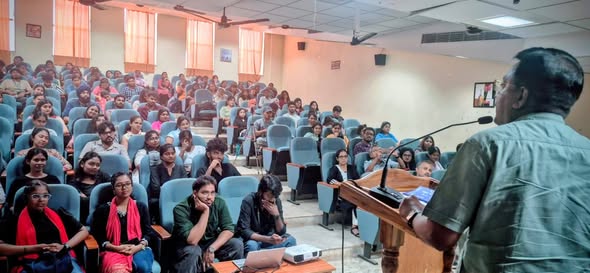
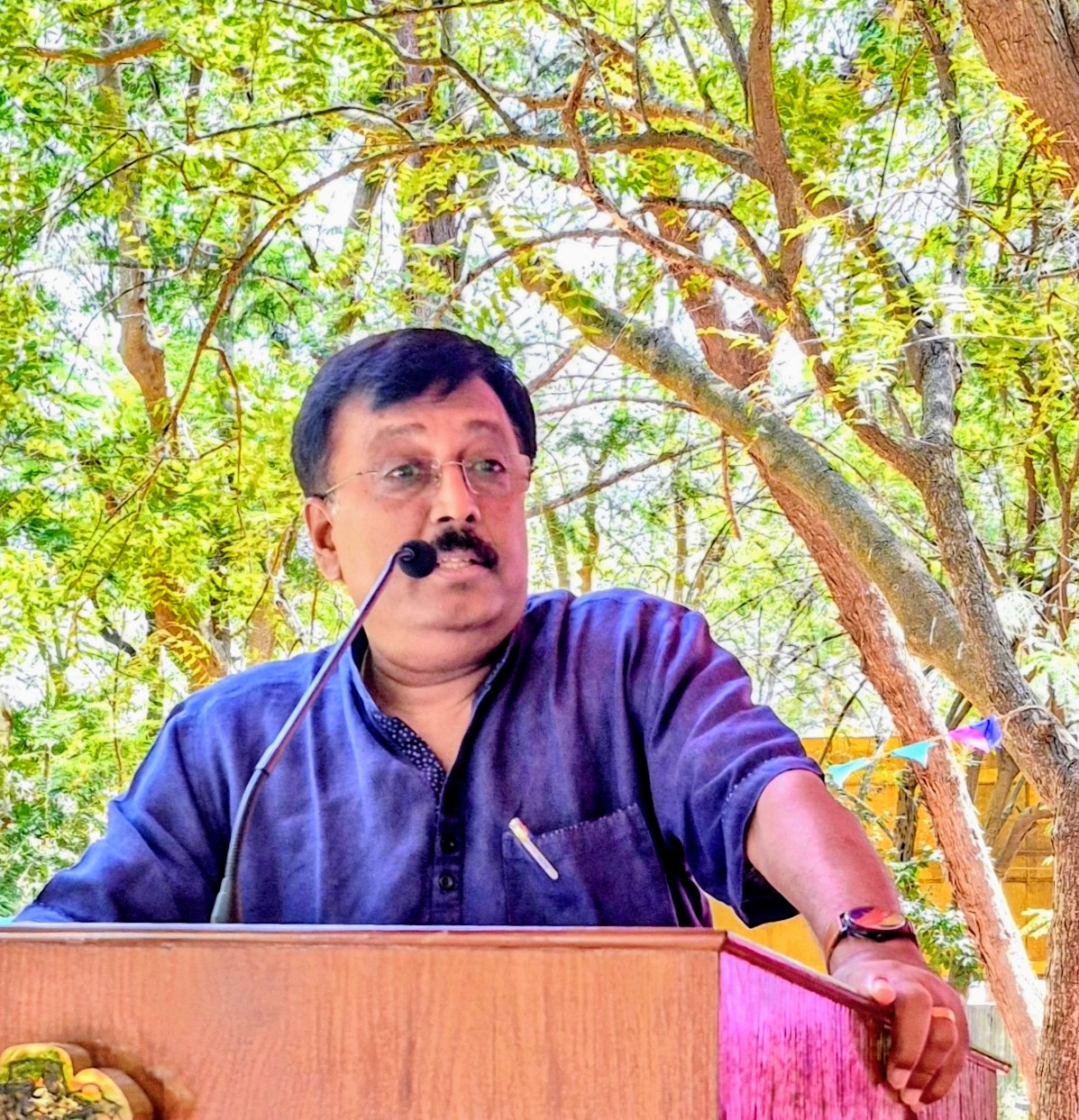
STEPPING INTO THE SURGE: Orientation Talk for the New Faculty of KVASU
Stepping Into the Surge: Nurturing Wisdom, Innovation, and Impact as New Faculty
[1]Prof. S. Ramkumar PhD (UK), Post Doc (UK), National Fellow (IVEF)
_________________________________________________________
We use the word ‘Surge’ intentionally. You are not entering a static academic world; you are stepping into a flood of information, rapid technological evolution, and changing community expectations across the Veterinary, Animal, and Dairy Sciences.
As new Assistant Professors, your job is no longer just to act as the “gatekeepers” of knowledge. Information is everywhere. Your true calling now is Nurturing Wisdom (helping students filter the Noise), Driving Innovation (reimagining how we teach and research), and Creating Impact (serving our farmers, companion animal owners, Consumers of milk and meat products, other millions of stakeholders and society).
To help us navigate this surge together, I am sharing 10 core tenets—all anchored by a single, guiding letter: The Letter C.
- CURIOSITY (Mind-set of Lifelong Learning)
- The Theme: Embracing continuous growth, being subject to the subject, and prioritizing deep education over mere examination.
As educators, your journey doesn’t end with your degree or your first lecture. Embrace a mind-set of continuous growth—be curious, seek out new knowledge, and model that enthusiasm for your students. When you stay curious, you invite your students to stay curious with you. All within a Curriculum we are to follow.
In the process of education, the most important mantra is “Subject Subjected to the Subject.” As educators, we must be subjected to the subject—this triad is key:
- The Content: The curriculum we teach.
- The Educator: How we process and deliver that content to meet student needs.
- The Student: They shape the learning as much as we do.
When we stay curious, we let this triad guide us toward a richer, more responsive educational process. We must understand the difference between education and examination. Too often, education is reduced to a means for passing exams—memorization for grades—instead of being driven by inquiry and a love of learning. Our task is to create an atmosphere where students are not just performing, but thinking deeply, engaging in dialogue, and discovering the joy of exploration.
Direct Examples for Teachers:
- Veterinary & Animal Sciences: Instead of teaching the same Veterinary Anatomy notes year after year, a Curious professor actively studies emerging 3D-modeling or diagnostic imaging software to see how avian or bovine muscle structures can be taught more dynamically.
- Dairy Science & Technology: Instead of repeating standard lectures on traditional milk pasteurization parameters, a Curious professor actively studies recent advancements in non-thermal processing methods—like Pulsed Electric Field (PEF) or High-Pressure Processing (HPP)—and integrates these cutting-edge tech concepts into their Dairy Engineering syllabus.
- CONSCIOUSNESS (Self-Awareness)
- The Theme: Reflecting on your teaching style, strengths, flaws, and how you emotionally and intellectually connect with your students.
Reflect on your own strengths and areas for growth. Understanding how you come across, how you engage, and how you respond to students is crucial. Self-awareness lets you adapt and connect in deeper ways, creating a learning space where everyone thrives.
Direct Examples for Teachers:
- Veterinary & Animal Sciences: Reviewing your anonymous mid-semester student feedback or recording one of your lectures in Veterinary Pathology to critically observe if your speaking pace is too fast, or if your tone is encouraging when a student asks a basic question.
- Dairy Science & Technology: A professor in Dairy Microbiology reflects on whether their heavy emphasis on laboratory testing protocols is overshadowing practical, floor-level issues. They adjust their delivery style to better bridge academic theory with real-world troubleshooting on the dairy plant floor.
- COMPETENCE (Subject Knowledge with Humility)
- The Theme: Knowing your field thoroughly while guiding students through today’s information overload with humility and wisdom.
Know your field inside out, but stay humble—there’s always more to learn. When you show that you’re a lifelong learner in your subject, you create trust and open curiosity in your students. Let them see that expertise is a shared adventure.
In the past, teachers were gatekeepers of knowledge, but today, we’ve shifted from an age of information poverty to one of information overload. All stakeholders—teachers, students, clients, even dairy entrepreneurs—now have access to an ocean of information at their fingertips. Our role is to manage this deluge: to help students and clients discern what matters, prioritize critical knowledge, and navigate this flood with discernment. In this way, we become guides, empowering them to thrive through wisdom in selection.
Direct Examples for Teachers:
- Veterinary & Animal Sciences: When explaining a complex dairy cow metabolic disorder like Ketosis, you guide students through the ocean of conflicting articles online, while openly admitting, “I don’t know the genomic marker for that specific breed variation off the top of my head, let’s research it together tonight.”
- Dairy Science & Technology: While discussing the chemistry of milk proteins during fouling in heat exchangers, a student asks about a highly specific, newly patented enzyme membrane bioreactor. The professor acknowledges the limits of their immediate memory, saying, “Let’s pull up the patent design together right now, look at the chemical engineering parameters, and learn how it improves on our existing models.”
- CAPABILITY (Adaptability to Tools)
- The Theme: Evolving along with technology, hybrid platforms, and digital resources to enrich the learning landscape.
The world is changing fast—virtual platforms, hybrid classrooms, and digital resources are now part of your toolkit. Stay adaptable, experiment, and invite students to explore these tools with you. When you evolve, so does the learning experience.
Direct Examples for Teachers:
- Veterinary & Animal Sciences: Transitioning from traditional chalkboard lectures to integrating virtual reality (VR) simulations or high-fidelity videos for practicing bovine rectal palpation or surgical suturing techniques before students ever enter the live animal clinic.
- Dairy Science & Technology: Transitioning away from purely flat blueprinted diagrams on a whiteboard to using interactive 3D digital walkthroughs and simulator software that allows B.Tech students to virtually manipulate and configure a modern, multi-stage Automated CIP (Clean-In-Place) system or a spray drying plant.
- COMPASSION (Empathy for Diverse Students)
- The Theme: Cultivating deep empathy for different student backgrounds and practicing emotional intelligence to avoid professional burnout.
Every student comes with their own background, challenges, and strengths. Cultivate deep empathy—listen, understand, and adjust. When students feel seen and valued, they engage more deeply, creating a richer classroom for everyone.
Crucially, cultivating empathy is essential not only for understanding students’ challenges but also for maintaining our own emotional balance. With the demands of administration, institutional pressures, and student needs, we risk emotional exhaustion. By practicing emotional intelligence—remaining calm, self-aware, and grounded—we avoid burnout and stay open-hearted. In this way, we create safe spaces where students feel seen and supported, fostering a sustainable, compassionate teaching practice.
Direct Examples for Teachers:
- Veterinary & Animal Sciences: Recognizing that a student from a remote rural farming background is struggling with clinical English terminology, and choosing to offer them supportive, low-stakes oral practice during clinic hours rather than penalizing them rigidly on written tests.
- Dairy Science & Technology: Noticing that a student who excels in Dairy Chemistry labs completely freezes up and panics during high-stress, fast-paced hands-on plant operations, and taking the time to mentor them privately, building their confidence in handling commercial-scale equipment without judgment.
- COLLABORATION (Co-Learning with Peers & Students)
- The Theme: Treating education as a shared ecosystem where you actively listen to and grow alongside colleagues and students.
Don’t just be a fountain of knowledge—recognize that your students and colleagues bring fresh perspectives. Invite that exchange—co-learn, listen to their insights, and grow alongside them. Together, you create a dynamic learning ecosystem.
Direct Examples for Teachers:
- Veterinary & Animal Sciences: An Assistant Professor in Animal Nutrition partnering with a colleague from the Livestock Production Management (LPM) department to design an interdisciplinary field study, while asking final-year BVSc students to bring real-world feed challenges they observed during their internship to the classroom.
- Dairy Science & Technology: An Assistant Professor in Dairy Technology teams up with a colleague from Dairy Business Management and a group of final-year students to optimize the production and cost-benefit analysis of a functional, probiotic dairy product, utilizing fresh market feedback collected during the students’ industry internships.
- CONTRIBUTION (Research for Growth)
- The Theme: Viewing research not just as a checkbox for publication, but as a vehicle for personal passion and bringing fresh insights into the classroom.
Engage in research not just for publication, but as a way to stay curious and contribute meaningfully to your field. When you grow as a researcher, you bring fresh insights to your teaching. Let your passion for discovery inspire your students to ask bigger questions.
Direct Examples for Teachers:
- Veterinary & Animal Sciences: Investigating a local outbreak of a tick-borne disease in cattle in specific regions of Kerala, and immediately bringing those real-time field isolates and epidemiological data into your next Veterinary Parasitology lecture to show students science in action.
- Dairy Science & Technology: Initiating a research project focused on isolating wild, local starter cultures from traditional fermented dairy products in Kerala, and bringing those live cultures into the Dairy Microbiology lab so students can witness firsthand how academic research directly creates indigenous product variations.
- CREATIVITY (Innovation in Curriculum)
- The Theme: Reimagining courses and using case studies or unique teaching methodologies to keep the classroom vibrant.
Don’t be afraid to reimagine your courses. Integrate new methods, interdisciplinary approaches, or real-world case studies. Innovation keeps the classroom vibrant, relevant, and prepares students for a rapidly evolving future.
Direct Examples for Teachers:
- Veterinary & Animal Sciences: Turning a dry lecture on Veterinary Jurisprudence or meat inspection rules into a gamified “Mock Courtroom” or interactive role-play where students must defend or audit a simulated livestock facility.
- Dairy Science & Technology: Redesigning a conventional course on Traditional Dairy Products into a dynamic “Shark Tank”-style product development competition, where B.Tech students must formulate a novel, value-added milk product (like an herb-infused paneer or localized whey beverage), complete with full packaging, shelf-life testing, and a business pitch.
- CHARACTER (Leading by Example)
- The Theme: Setting the tone of integrity, resilience, and professional excellence through your daily actions.
Your actions, integrity, and enthusiasm set the tone for those around you. Be a leader in your values—show resilience, innovation, and a commitment to excellence. Inspire not just by words, but by the way you teach and live.
Direct Examples for Teachers:
- Veterinary & Animal Sciences: Demonstrating meticulous biosecurity and compassionate animal handling protocols during early morning clinical postings, showing the students that a true veterinarian never cuts corners on animal welfare, regardless of how tired they are.
- Dairy Science & Technology: Strictly adhering to and enforcing the highest standards of food safety, personal hygiene, and HACCP protocols during student experiential learning sessions in the university’s experimental dairy plant, demonstrating that a true dairy professional never compromises on sanitary standards.
- COMMUNITY (Societal Impact)
- The Theme: Aligning your knowledge and innovations with the ultimate goal of uplifting farmers, companion animal owners, animal health, and society.
Remember, your role is not just to train professionals but to serve society. Whether in animal health, dairy innovations, or beyond, let your work have a positive ripple effect on communities. Your knowledge and actions can drive real change.
Direct Examples for Teachers:
- Veterinary & Animal Sciences: Translating complex mastitis prevention research into a simple, highly practical Malayalam brochure, a social media reel, or a video capsule that local dairy farmers can easily understand and implement to protect their livelihoods.
- Dairy Science & Technology: Taking research on low-cost detection kits for milk adulteration or simple mastitis screening, and translating it into highly accessible, practical workshops or Malayalam training guides for local women’s dairy cooperative societies (Milma routes) to safeguard local public health and farmer income.
CONCLUSION: Steering Through the Surge
The “Surge” confronting Veterinary, Animal, and Dairy Sciences does not have to be an overwhelming flood; rather, it is a powerful current that can propel our institution forward. By anchoring your academic career to these 10 Cs, you transform from being mere transcribers of textbooks or digital notes into active architects of wisdom, innovation, and impact.
As new faculty, you hold the unique privilege of shaping the next generation of veterinarians, technologists, and entrepreneurs—the very core of what a progressive University looks for. Let these tenets guide your lectures, inspire your research, and steady your interactions.
Step into this surge with confidence, stay grounded in your purpose, and together, let us drive real, transformative change for our students and the community we serve—ensuring we don’t just face the future, but confidently shape it.
_______________________________________
[1] Founder Director, Directorate of Entrepreneurship, KVASU; Former Dean, RIVER, Puducherry; Founder Director, Entrepreneurship Development Cell, Department of Industries, Govt. of Puducherry. Now author, blogger and Education Consultant to Universities. Blog: www.strayndom.com e-mail: suku.ramkumar@gmail.com