ramkumar blog post

NANO-FEELING

STRANDOMS: the stray and random thoughts

Mar 21 , 2026

S.RAMKUMAR

NANO-FEELING

I have experienced a tiny, instant spark, almost within a fraction of moment- nano – (like many of you, I’m sure)—yet it carries immense satisfaction and joy in a human being—something I call a nano-feeling.


What is a nano-feeling? It is a fleeting moment that arises when we achieve something significant—often unseen but deeply powerful—where your joy is born from another’s achievement, in which you played a role.


A brief example: After four decades in classrooms, my greatest joy lies in nano-feelings. In 1986, a quiet student sat in my class. In 2013, as I moderated an international workshop, I saw her leading a group—transformed. From a distance, a nano-feeling surged—a priceless joy, seeing a student thrive, knowing I had a part in her journey.


How do we cultivate nano-feelings for greater good? We can harness them in schools, workplaces, and organizations. By recognizing these small, powerful sparks, we boost motivation, inspire innovation, and enrich every journey—lifting the entire institution’s impact.

Share

Book Review: THE CREATIVE GENE

Book Review :
THE CREATIVE GENE
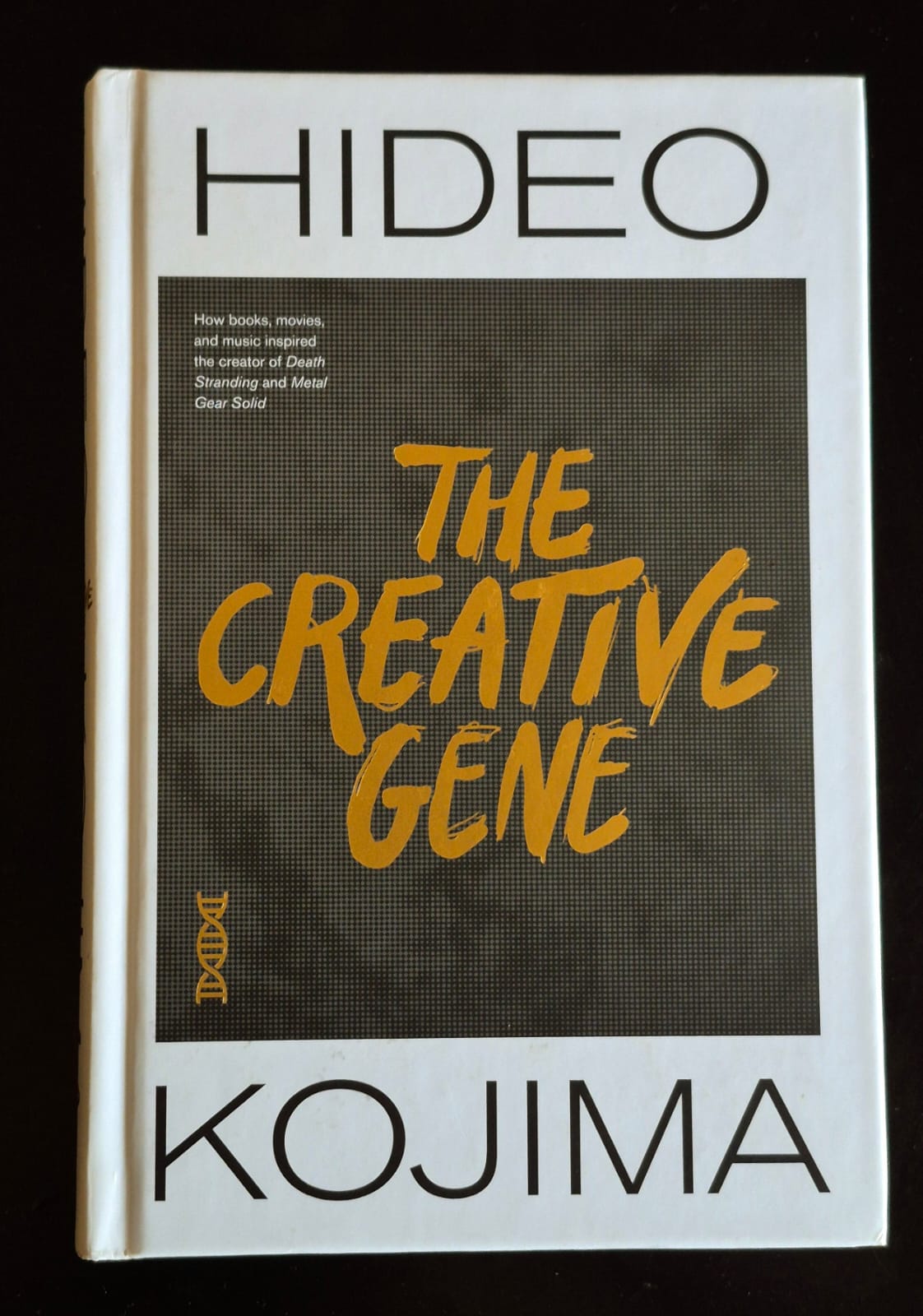
by Hideo Kojima

S. Ramkumar

JAN 27 , 2026

Game changer! How this book who is the creator of the iconic video games Metal Gear Solid and Death Stranding changed my outlook on videogames !

Are Games the Problem? An Educator Reads The Creative Gene

_______________

S. Ramkumar

Are video and digital games really all that bad? Parents and teachers often express concern about the amount of time children and students spend playing games on computers or mobile phones—frequently at the expense of their studies. As a teacher, and later as an administrator in colleges and universities, I have witnessed this concern firsthand. In a few instances, students have indeed seen their academic performance suffer due to excessive gaming.

The Creative Gene by Hideo Kojima—creator of the iconic video games Metal Gear Solid and Death Stranding—offers a refreshing and thoughtful perspective on this widely debated issue. Though published in 2013, the book holds even greater relevance today. Importantly, this is not a guide to creating video games. Instead, it is a collection of short, reflective essays on the books, places, people, films, and events that shaped Kojima’s creative life and, indirectly, the worlds he built through his games. Central to his thinking is the enduring connection we have with books and the way ideas continue to influence us long after we first encounter them.

Until reading this book, I too shared the common belief that digital games were necessarily of limited educational value. Kojima’s essays—each revealing a fragment of his intellectual and emotional journey—prompted me to reconsider that assumption. He demonstrates how well-designed games can nurture essential capacities needed in the digital age: creativity, problem-solving, analytical thinking, imagination, and narrative understanding. The real challenge for parents and educators, as the book subtly suggests, lies in distinguishing meaningful engagement from mindless consumption—an increasingly difficult task in the presence of a widening generational gap.

In the introduction, titled “Memes Are What Connect Us,” Kojima articulates his core belief: “A world without books is inconceivable.” Drawing an analogy between genes and memes, he explains that while genes are passed biologically, memes—ideas, emotions, and ways of seeing—are transmitted through books, films, and shared cultural experiences. These memes, he argues, form invisible threads that connect individuals across time and space.

The book is divided into two parts: Part One, “My Lovable Memes,” and Part Two, “Things I Liked at a Certain Time or Place.” Across these sections, Kojima reflects on the influences that shaped his worldview, noting that “the memes these stories communicated to me provided the energy I used to create, and to live.” These accumulated influences find powerful expression in his groundbreaking video games, which are known for their narrative depth, philosophical layers, and emotional complexity.

By showing how inspiration can come from anything one reads, sees, or hears, Kojima reframes video games not as mere entertainment, but as complex creative systems rooted in storytelling and human experience. The challenges within such games demand thought, interpretation, and imagination, making them intellectually engaging rather than passively consuming.

The Creative Gene is ultimately more than a personal archive of inspiration. It is an invitation to rethink our assumptions about games, learning, and creativity. The book challenges the notion that games themselves are the problem, suggesting instead that it is the type of games and the lack of balance that lead to addiction and neglect of responsibility. Thoughtfully designed and responsibly engaged with, games—like books—can become powerful tools for intellectual and creative growth.

A Note for Parents and Teachers: S. Ramkumar

Rather than asking whether games are good or bad, we may need to ask which games our children engage with and how they engage with them. Just as books vary in depth and value, so do games. Guidance, dialogue, and balance are essential. When adults take time to understand the digital worlds children inhabit, games can become opportunities for learning, creativity, and connection—rather than causes for concern.
RK’s 2025: “to look back is to see Forward”

RK's 2025: to look back is to see Forward

S. Ramkumar

The year 2025 has been a remarkable journey, woven with threads of meaningful connections, quiet triumphs, and moments of pure bliss.  As we bid farewell to this final year of the millennial quarter,  what truly stands out are not just the milestones, but the people, places, conversations, and shared spaces that shaped them.

2025 : The year of STRANDOM.poems

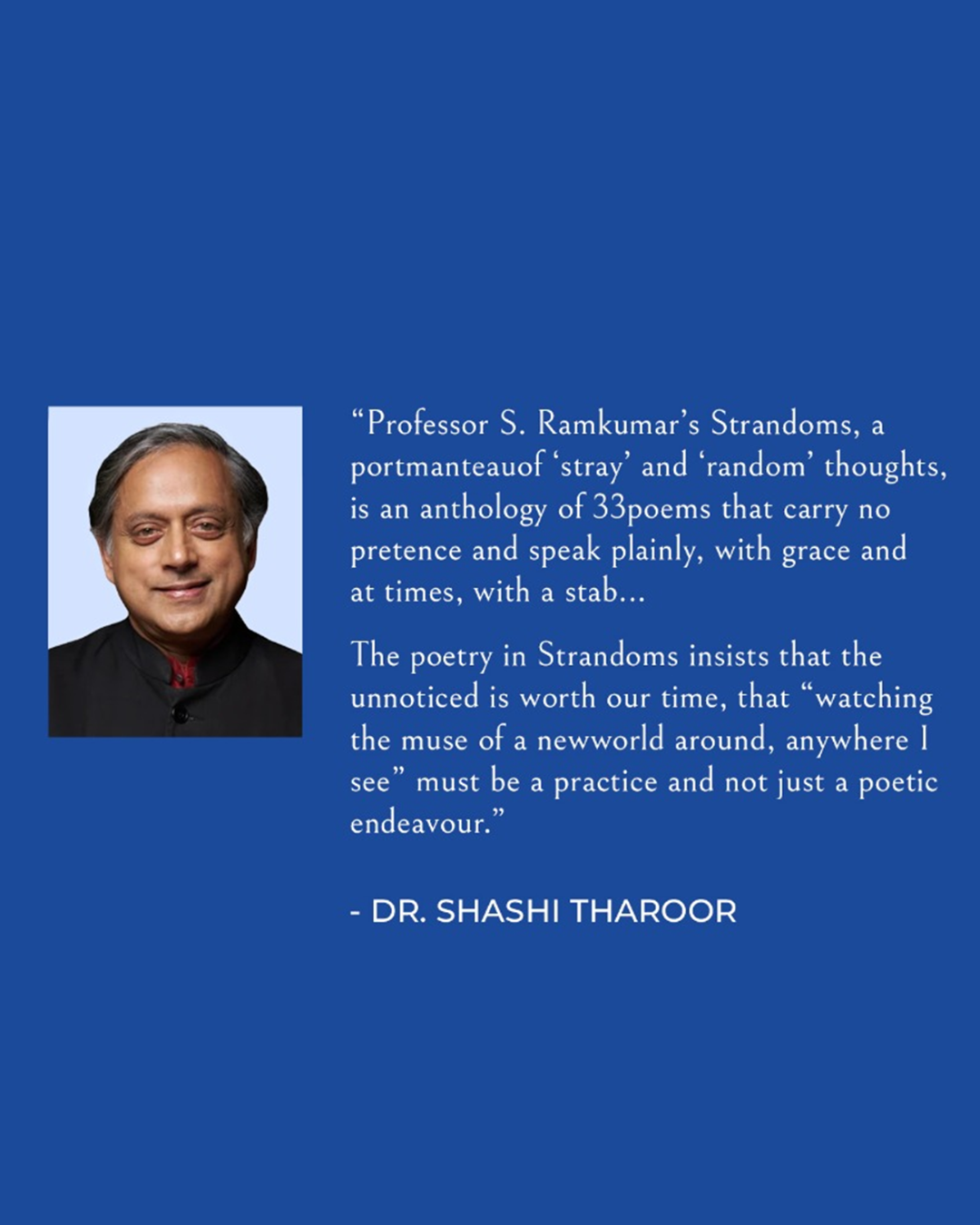
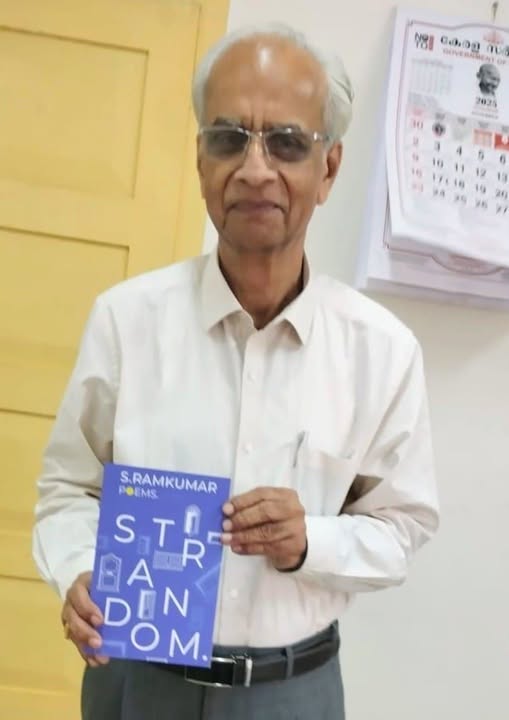
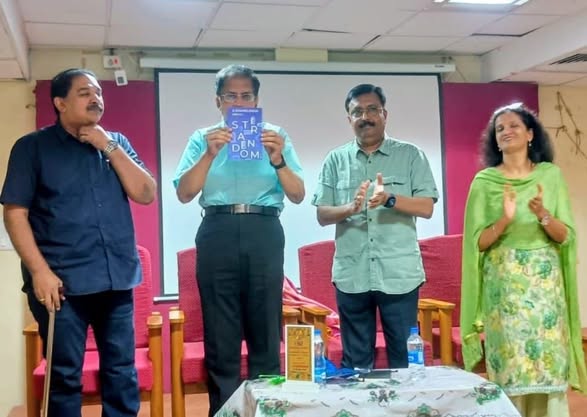
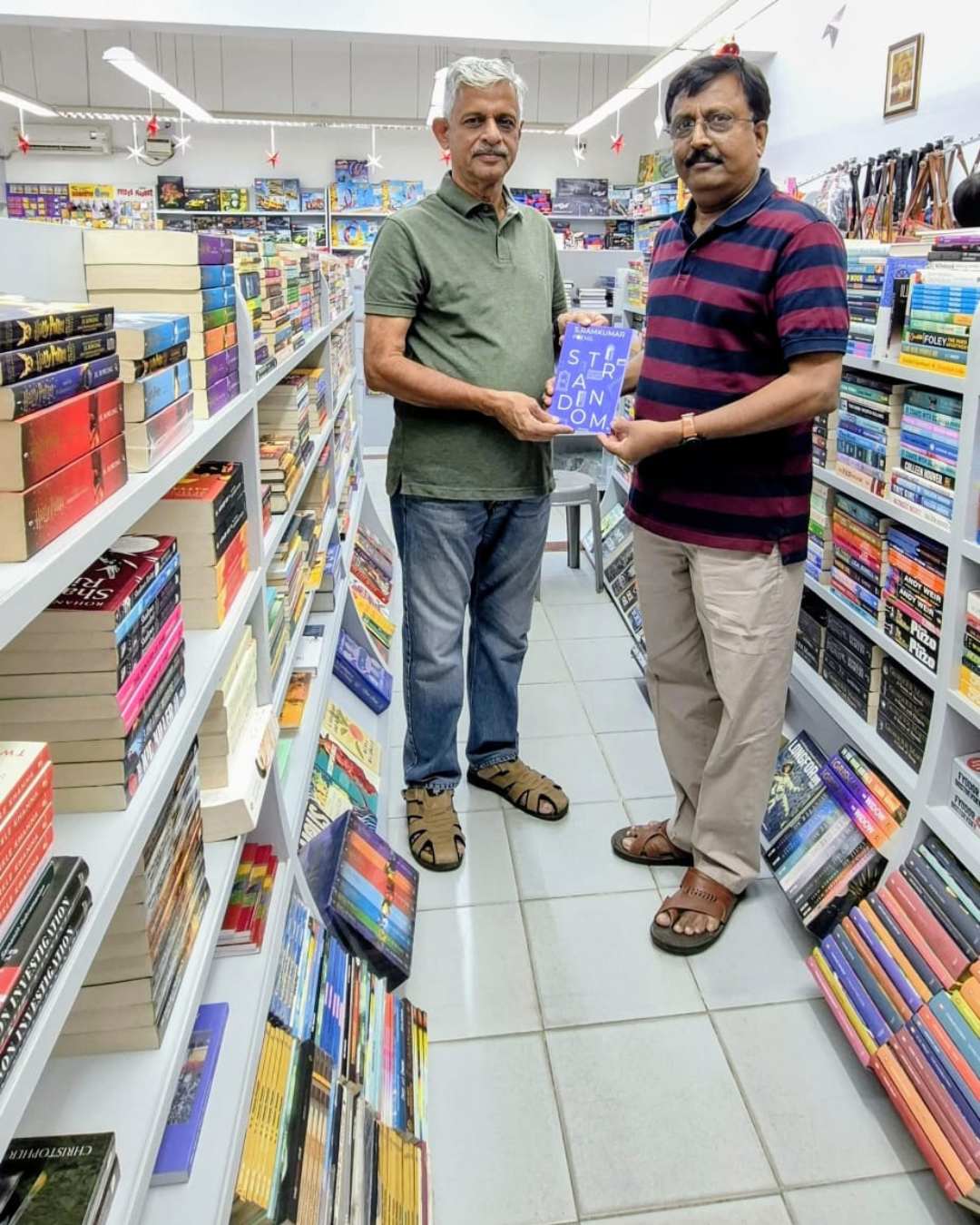
The year 2025 marked a significant literary milestone in my life with the release of my second book, “STRANDOM.Poems,” published by Notion Press Chennai. Now available on major platforms, the encouragement, thoughtful reviews, and heartfelt responses from readers have been profoundly humbling.

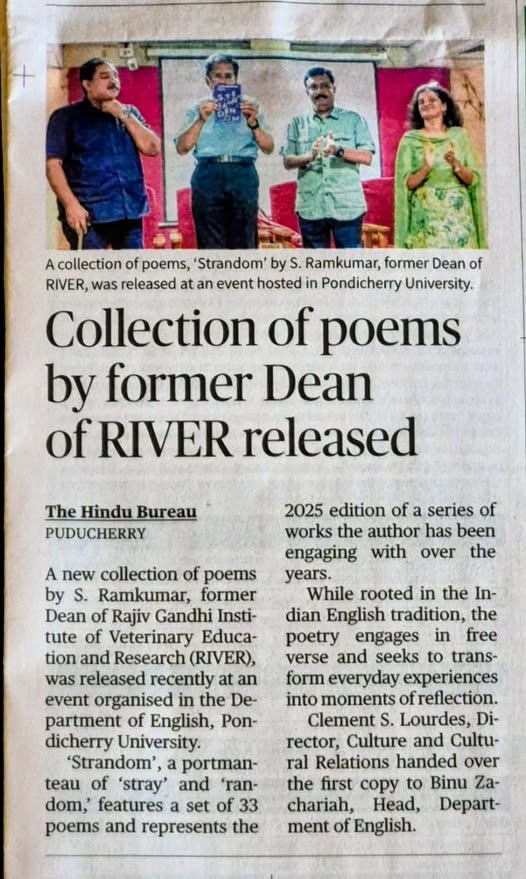
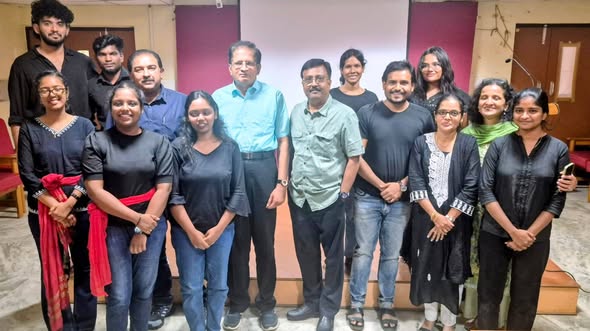
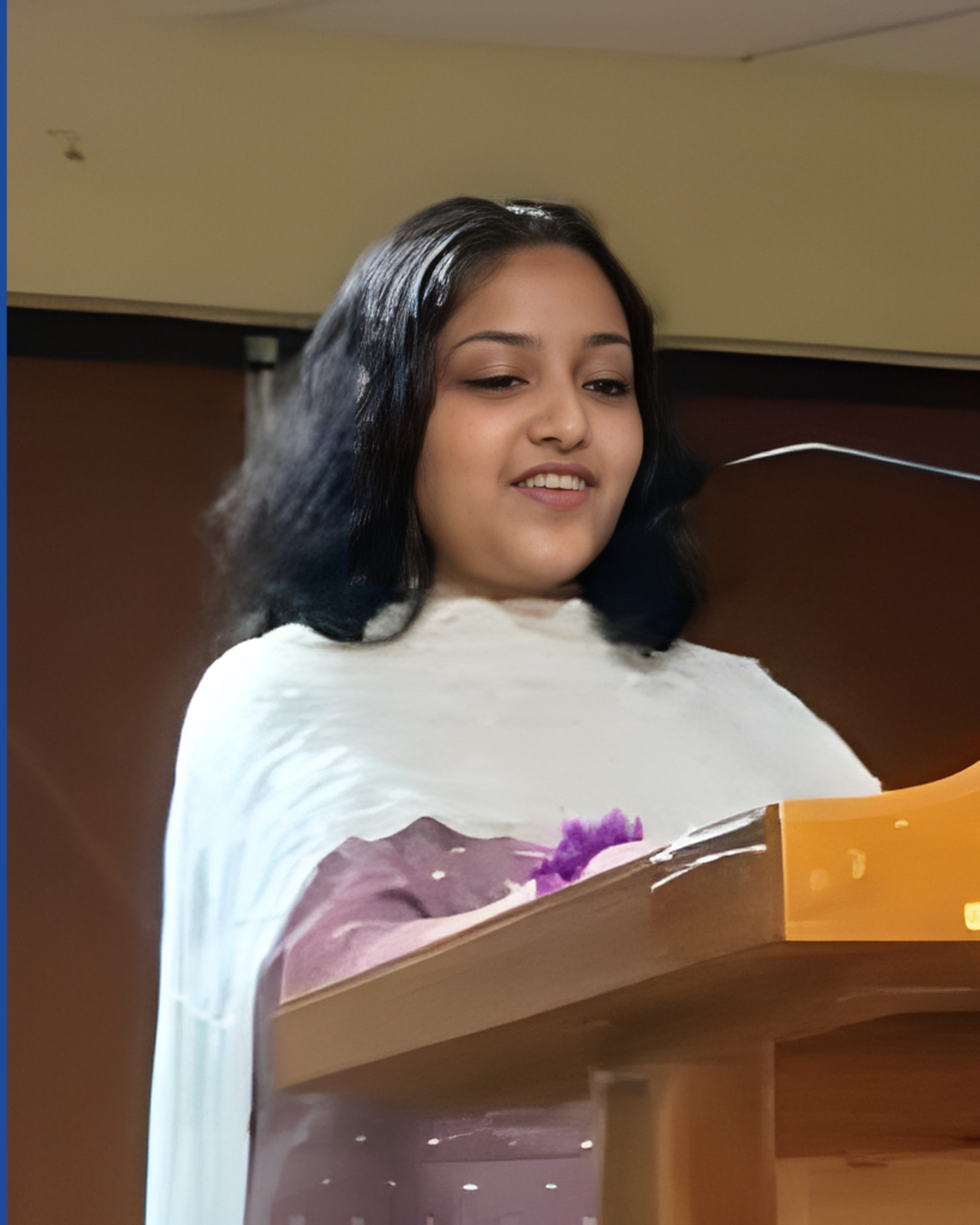
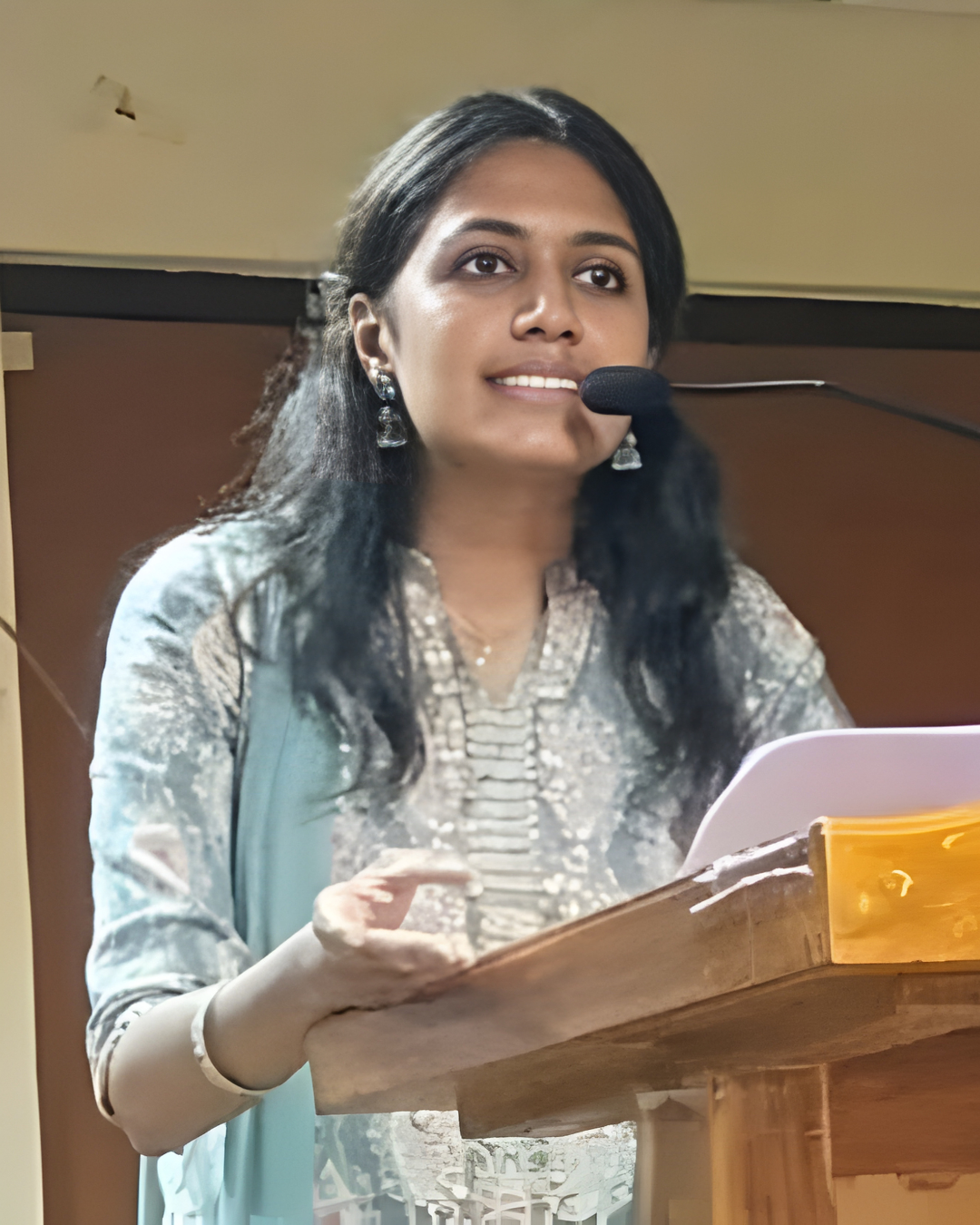
The official launch of the book took place during a memorable literary evening at the Department of English, Pondicherry University. The academic discussions surrounding “STRANDOM.Poems” were particularly gratifying, especially when students engaged deeply with the text. There’s an immense satisfaction that comes from witnessing readers discover their own meanings within the words you’ve crafted – it makes the entire creative journey feel incredibly exciting and encouraging.


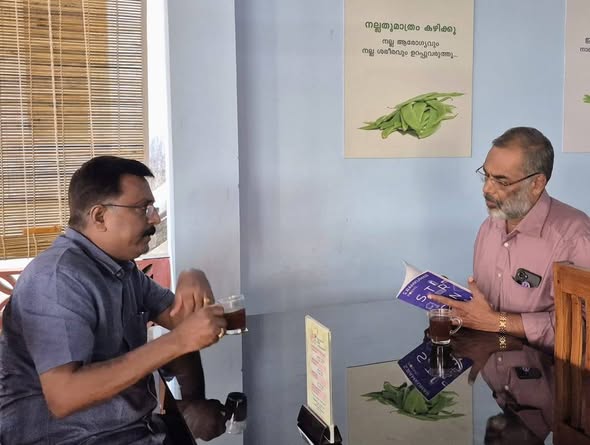
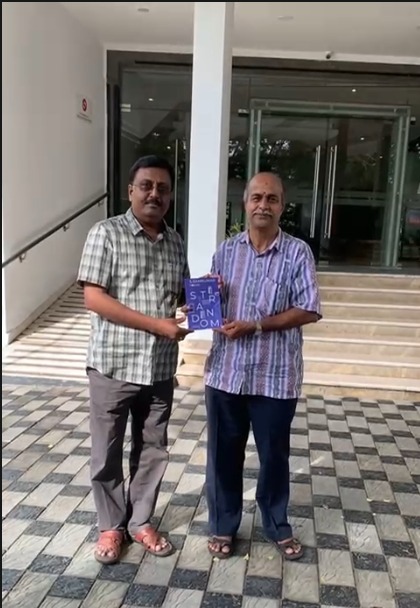
Moments of sharing the book

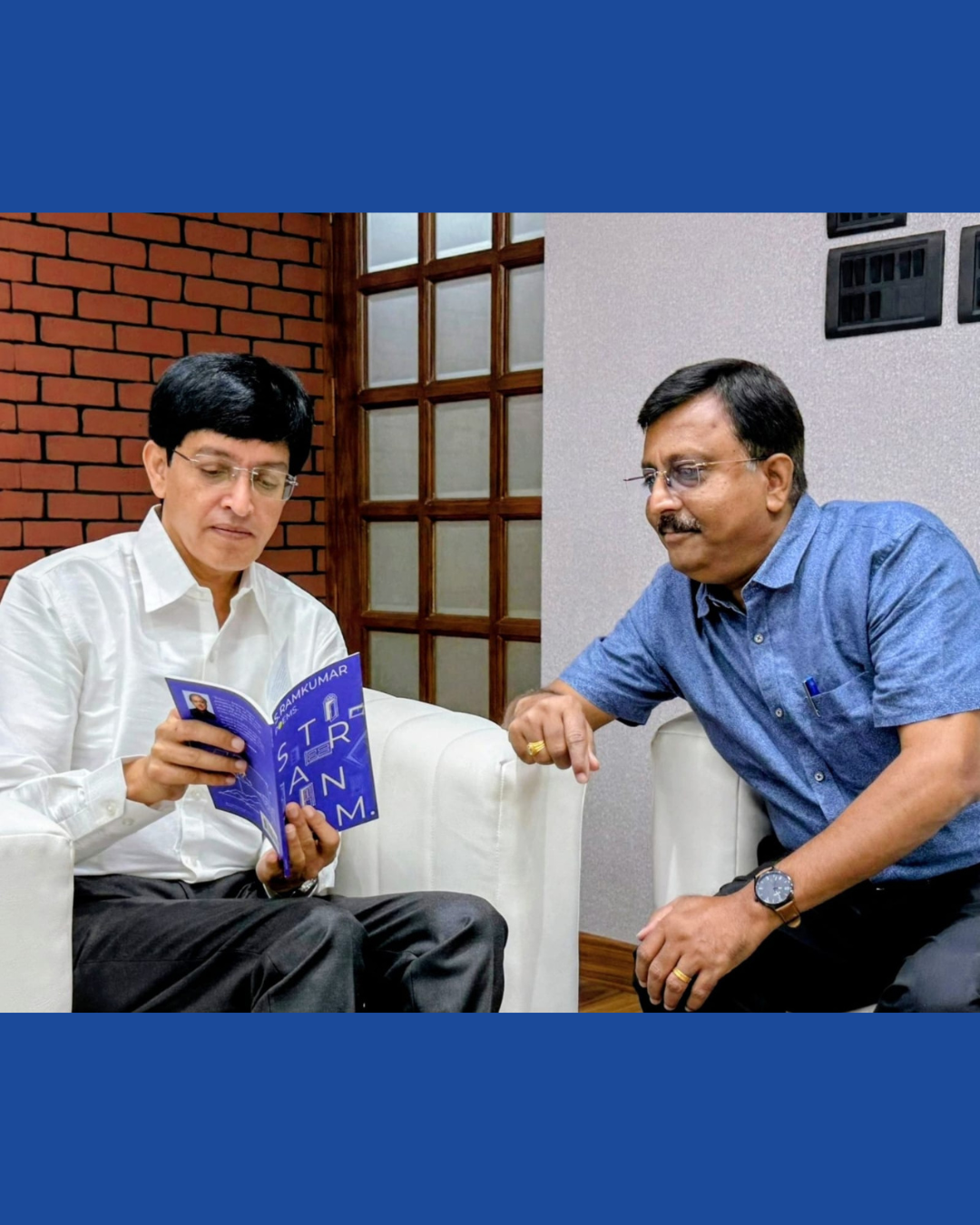
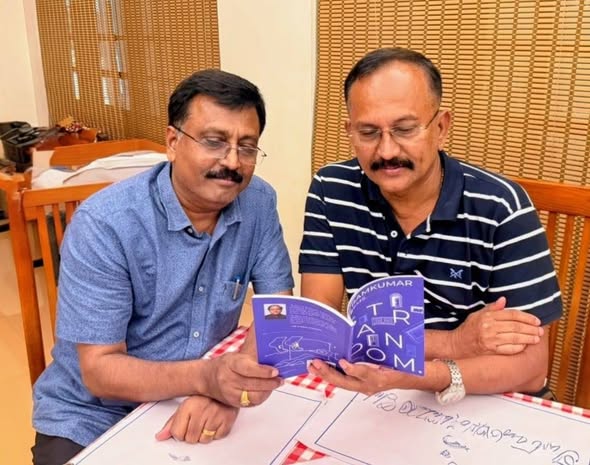
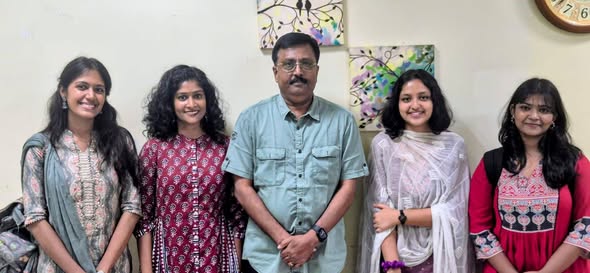
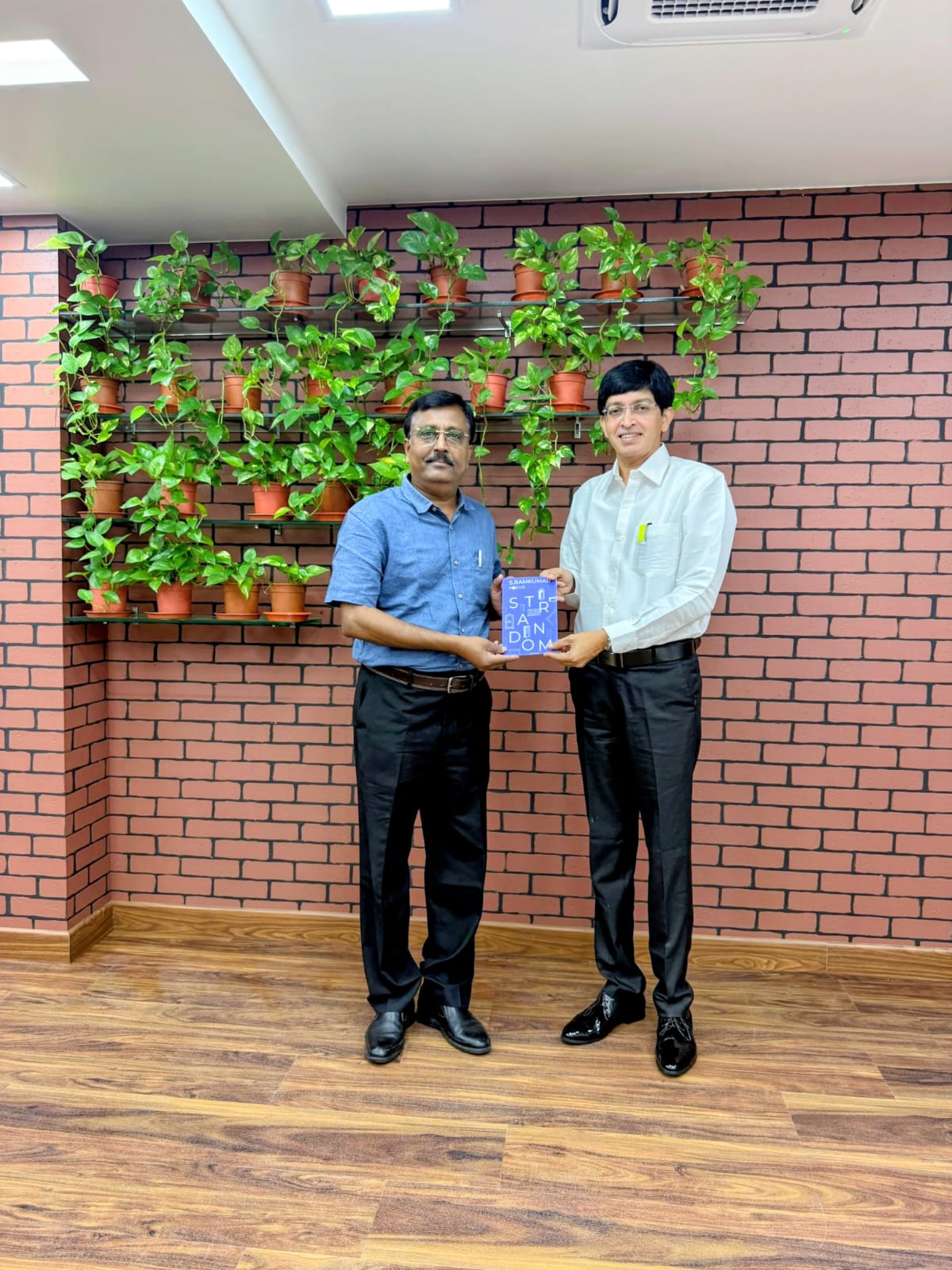
Moments of sharing the book with scholars, students, friends,  readers, dignitaries, and poetry lovers , were imbued with gratitude and grace. I’ve realized, once again, that poetry truly lives not just on pages, but in the intimate spaces of conversations and shared silences.

Education Beyond Classrooms: Nurturing Young Minds

One of the most satisfying chapters of 2025 was the opportunity to engage with educational institutions and the bright young minds within them. From bustling schools to esteemed universities, there’s a palpable shift towards real-life learning experiences.

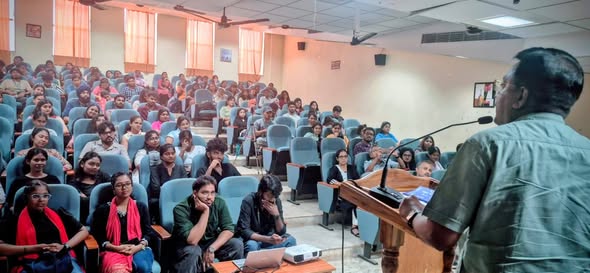
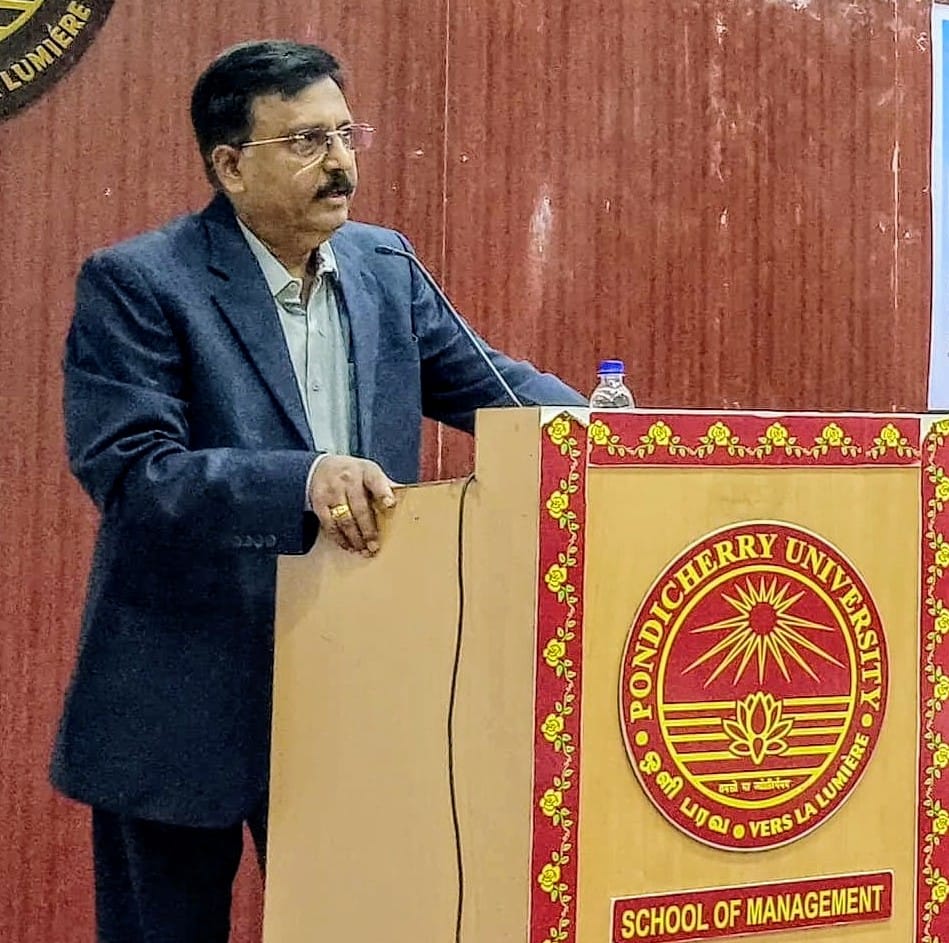
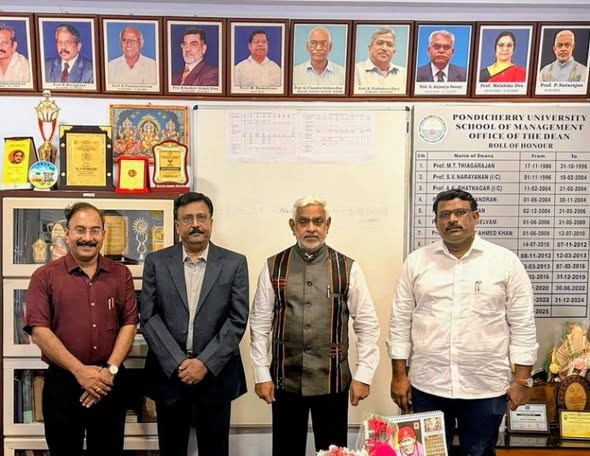
I had the privilege of addressing MBA students at Pondicherry Central University, alongside the esteemed Dean and Head of the Department. This was a wonderful opportunity to share insights on leadership, purpose, and the critical importance of lifelong learning. Such interactions are a powerful reminder that dialogue keeps education vibrant and relevant in an ever-changing world.

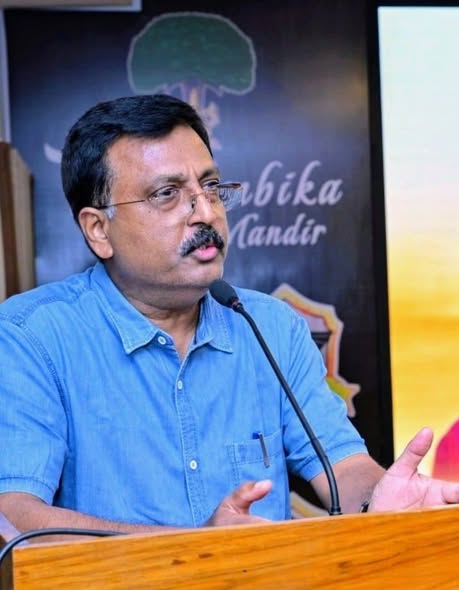
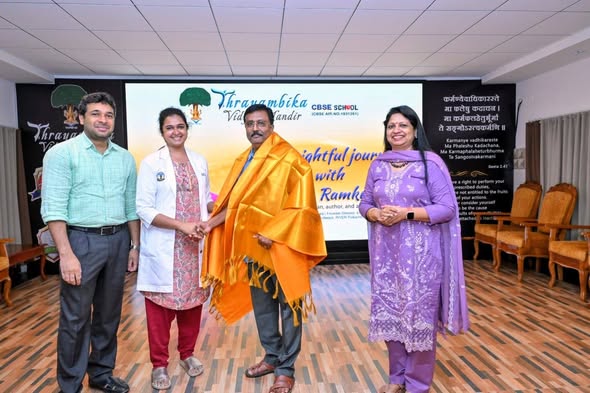
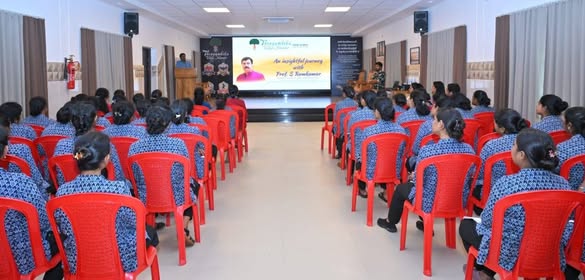
An enriching afternoon spent with the dedicated teachers of Thrayambika Vidya Mandir School in Kulasekharam, Tamil Nadu, reaffirmed my belief that modern education transcends mere instruction. It’s about truly understanding learners, fostering their individuality, and equipping them for life beyond the confines of textbooks. Teachers, without a doubt, are the true architects of our future.
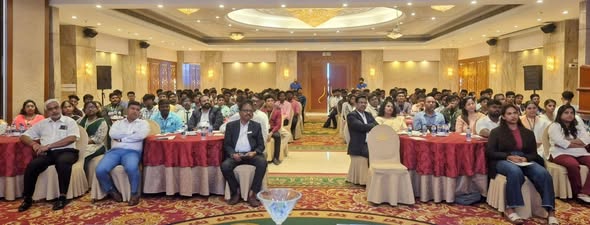
International Conference of IVEF @ chennai

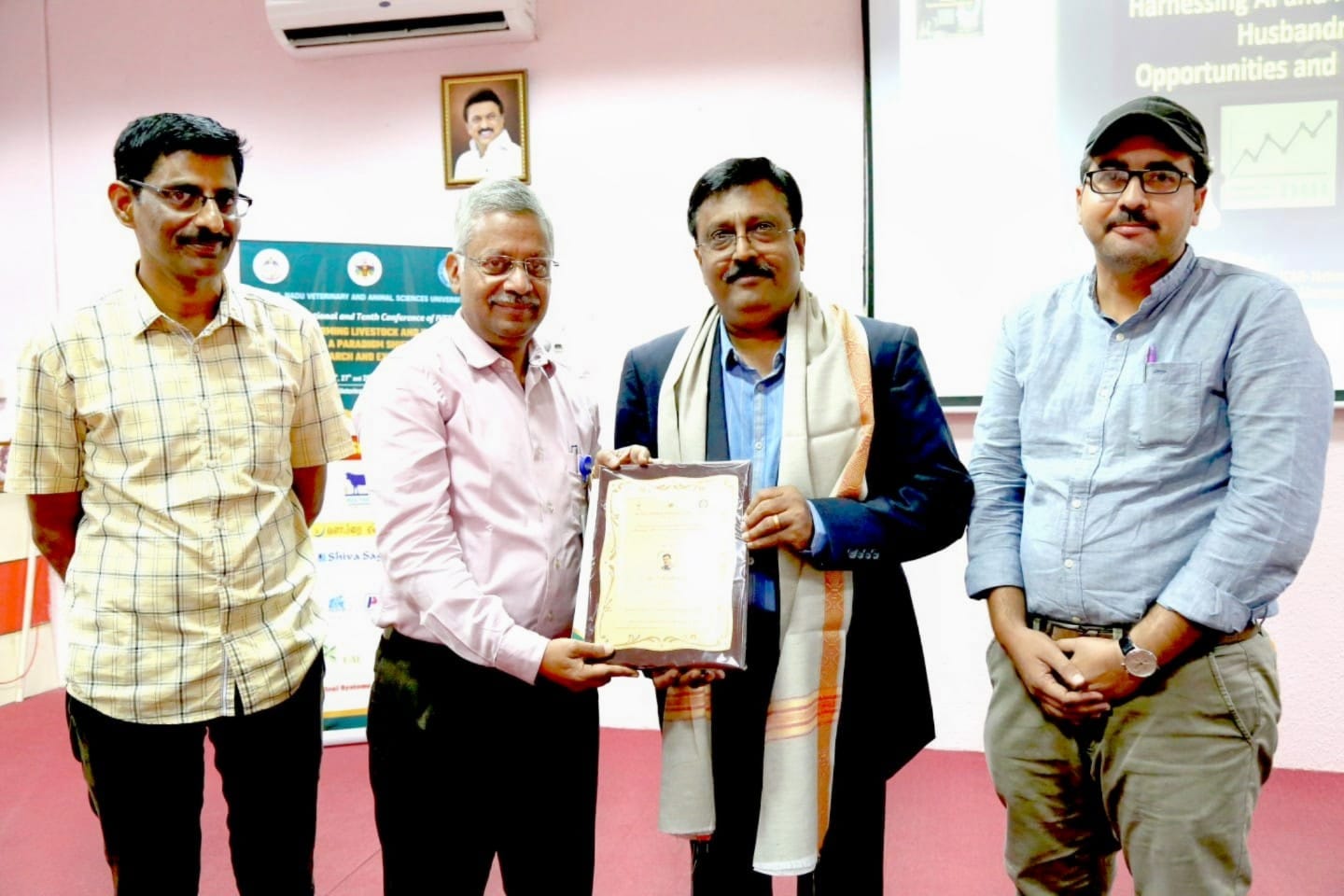
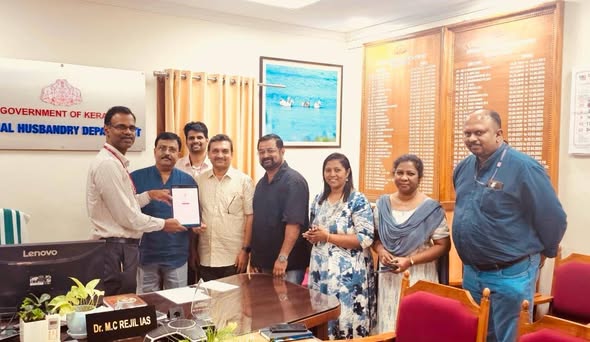
Achievement Award from AHD Govt. of Puducherry

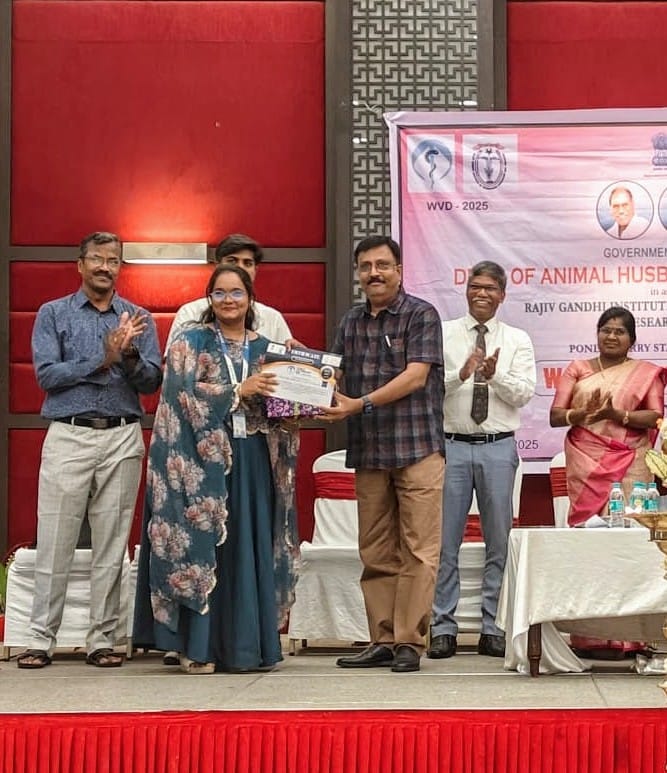
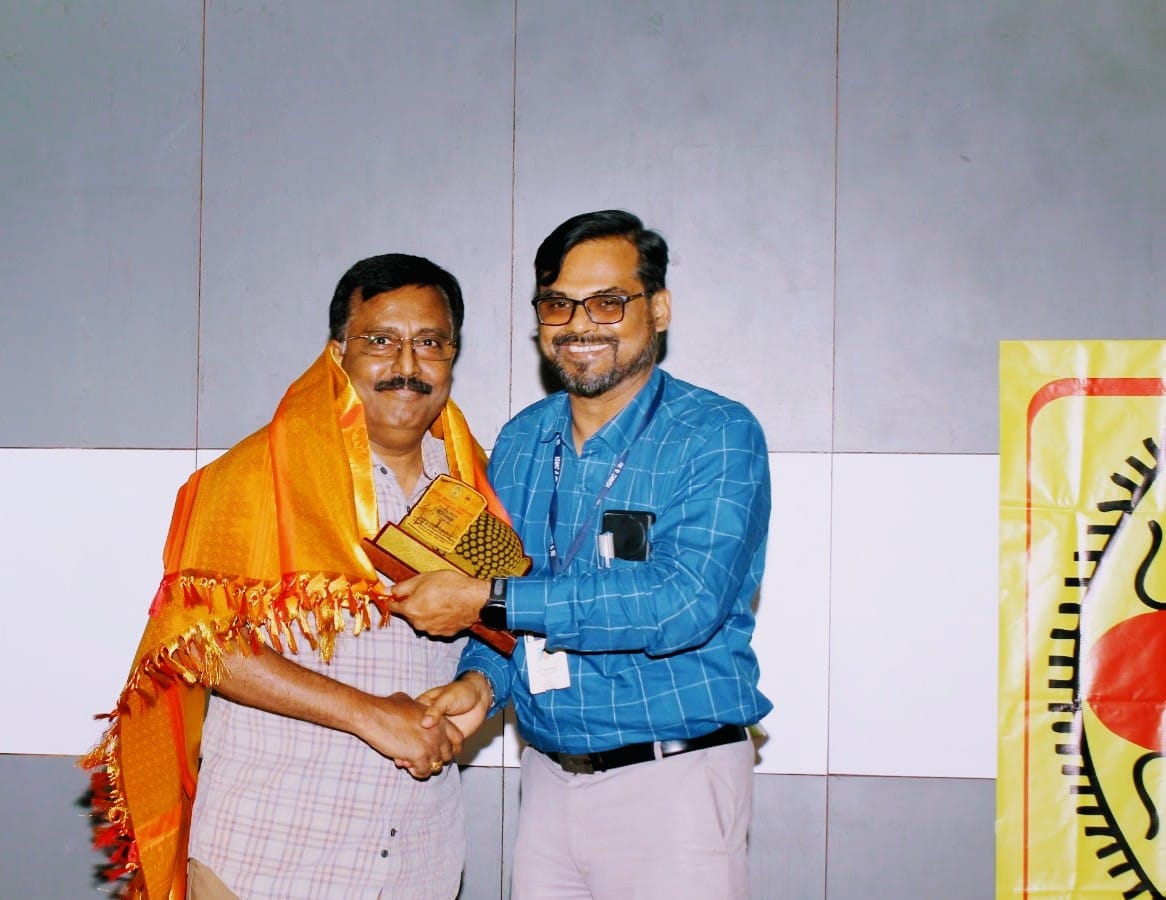
Thankful in receiving the Achievement Award from the Department of Animal Husbandry, Government of Puducherry, alongside my esteemed professional colleagues.

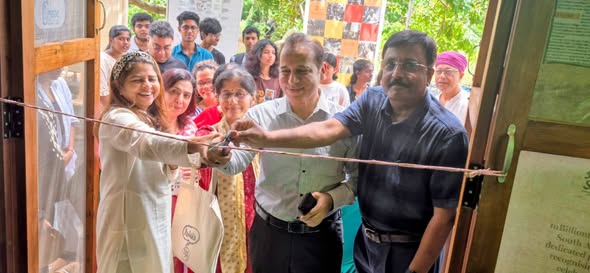
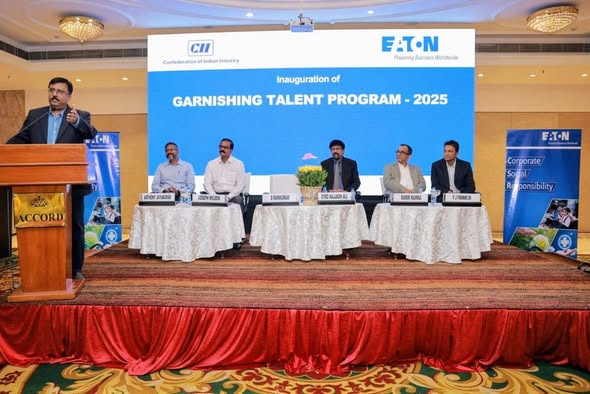
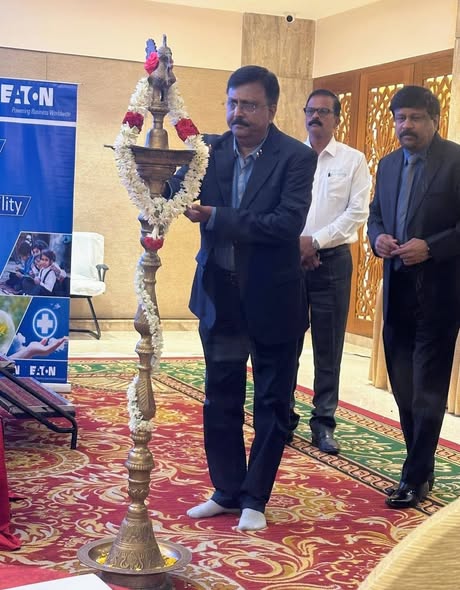
Inaugurating the CII–EATON “Garnishing Talent Programme”

Proud to be part of this initiative for college students from Puducherry and Pondicherry University.
Photos from the programme showcased energy, mentorship, and empowerment.

A Proud Moment in Sharjah

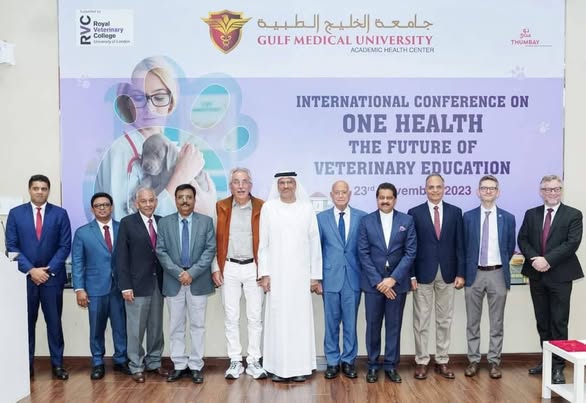
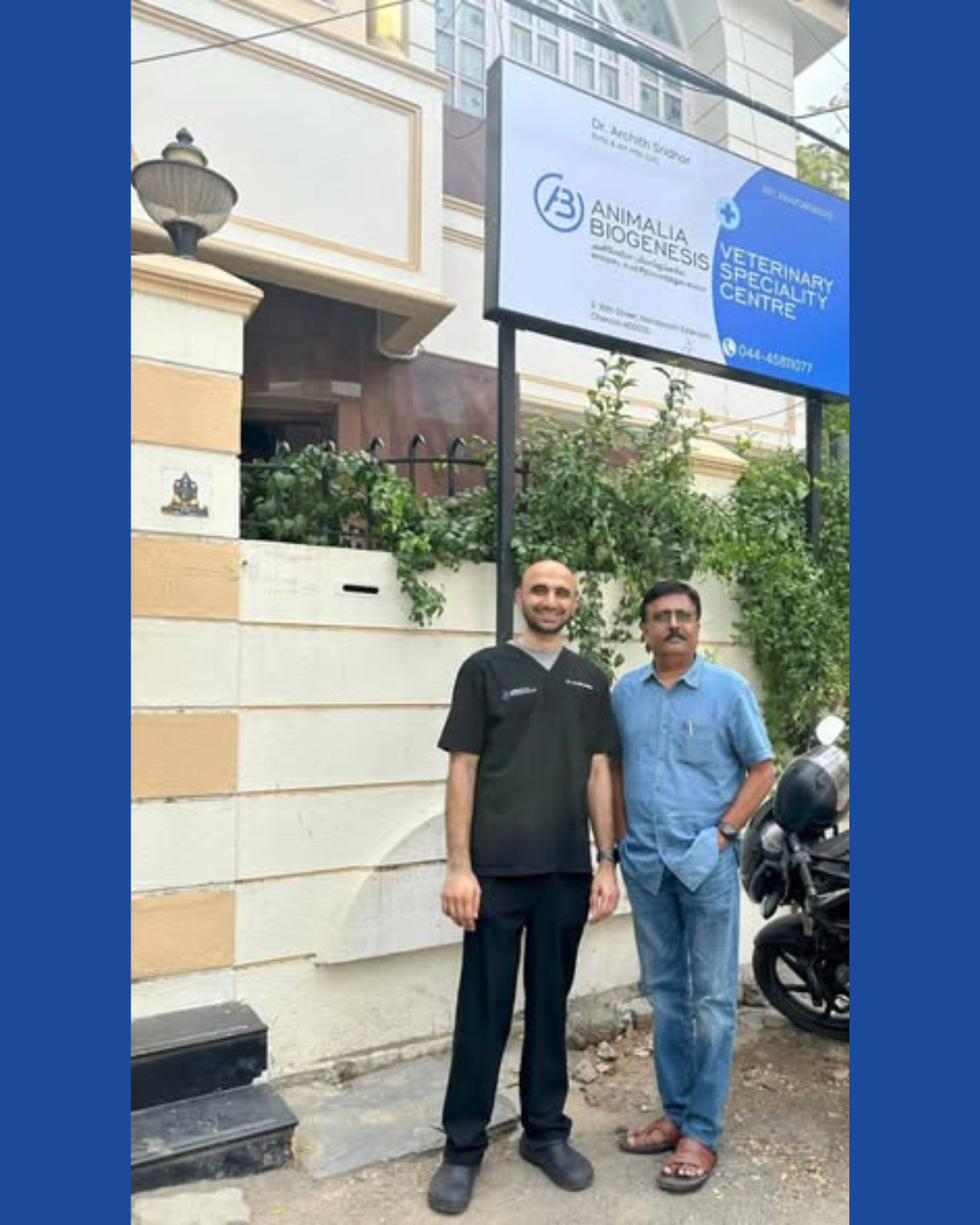
Grand opening of the Thumbay Veterinary Clinic — a milestone in veterinary care and education.
Honoured to join hands with Gulf  Medical University with a dedicated team and initiate a new era in veterinary education

From Students to Professionals: Journeys of Growth

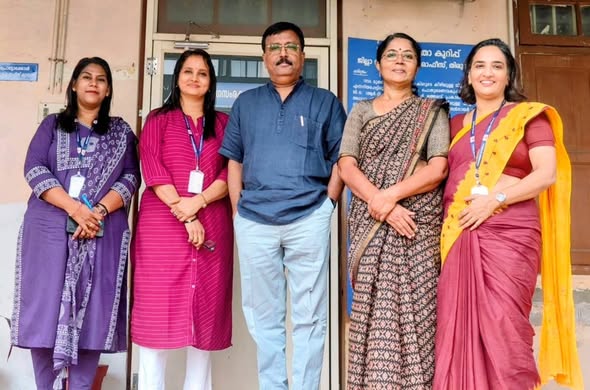
There are moments when time seems to fold back on itself, offering a glimpse into the past and present simultaneously. Meeting former students, now confident and accomplished professionals, at the Kerala Indian Veterinary Association initiative and other professional gatherings was deeply moving.

Witnessing their journeys, from the vibrant classrooms to their impactful roles in the professional world, stands as a quiet testament to growth, perseverance, and the boundless possibilities of innovation.

It was particularly inspiring to see initiatives like the Digital Veterinary Directory and the significant progress toward establishing new veterinary institutions within the Government of Kerala. These moments truly underscore the joy of seeing visions transform into tangible realities.

Cultural Spaces and Collective Memory

Playing a role in initiating the SPIC MACAY cultural launch

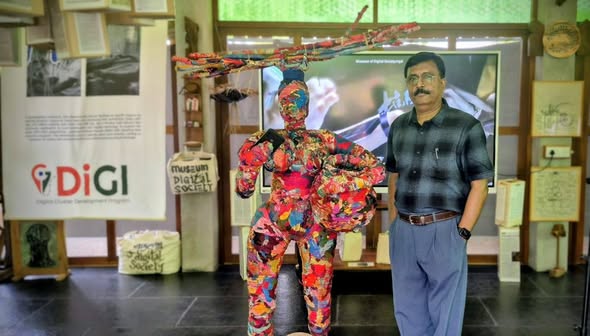
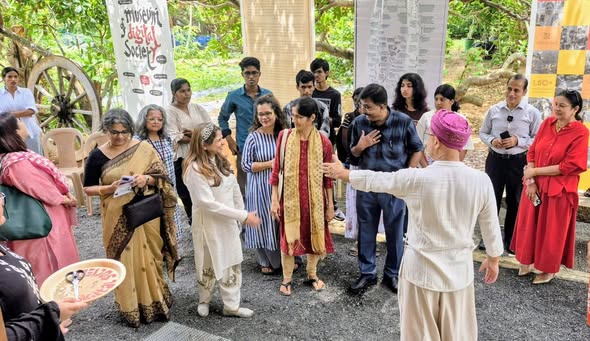
Museum of Digital Society

Visits and participation in vibrant cultural spaces, such as the Photo Exhibition at Auroville and the grand opening of India’s first Museum of Digital Society, offered profound moments of reflection. These experiences prompted contemplation on themes of time, memory, and the ever-evolving relationship between humanity and technology.

These moments served as a powerful reminder that progress and thoughtful reflection must always walk hand-in-hand. 

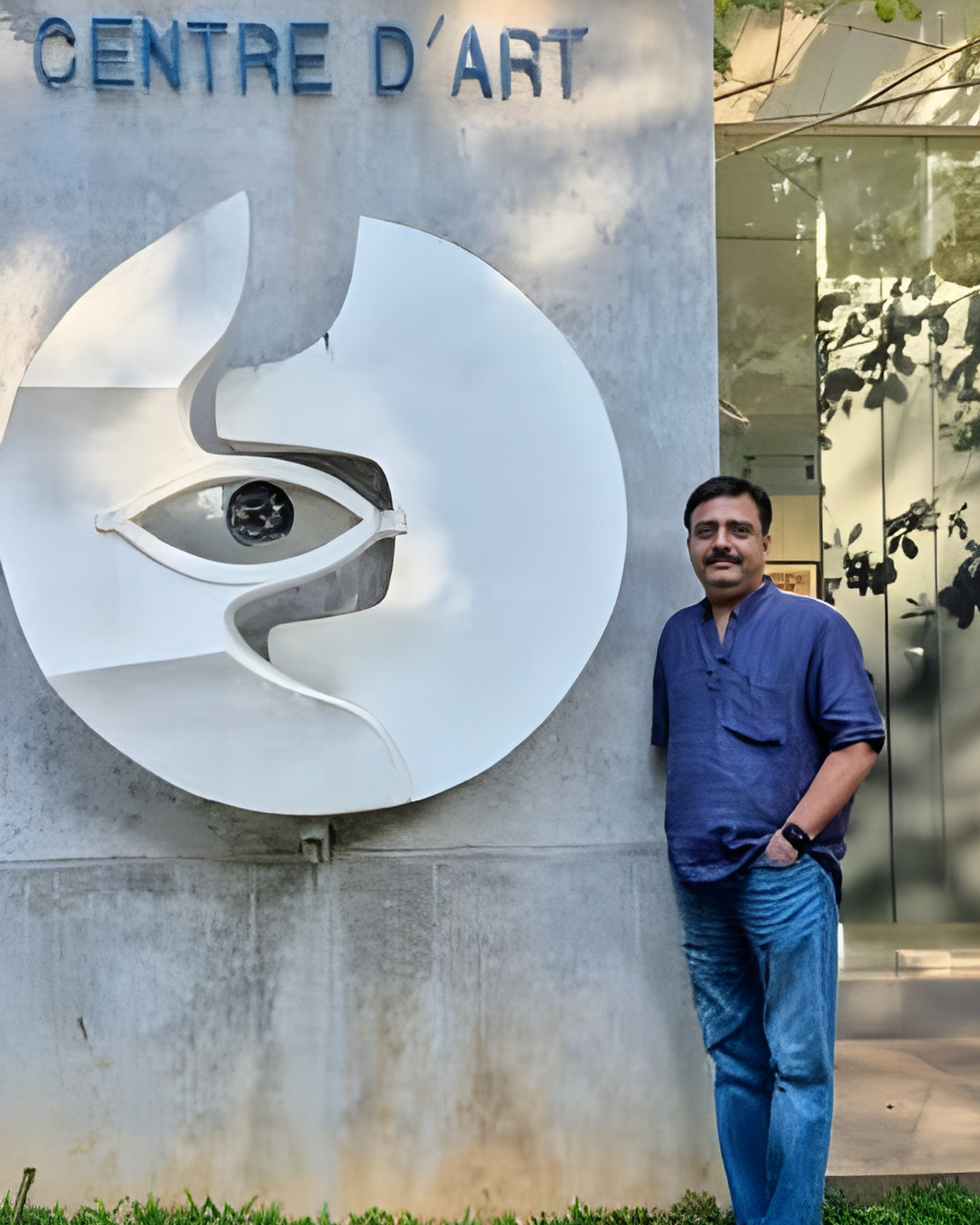
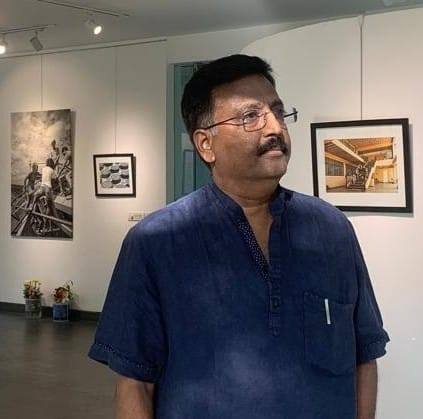
Art Exhibition at Auroville

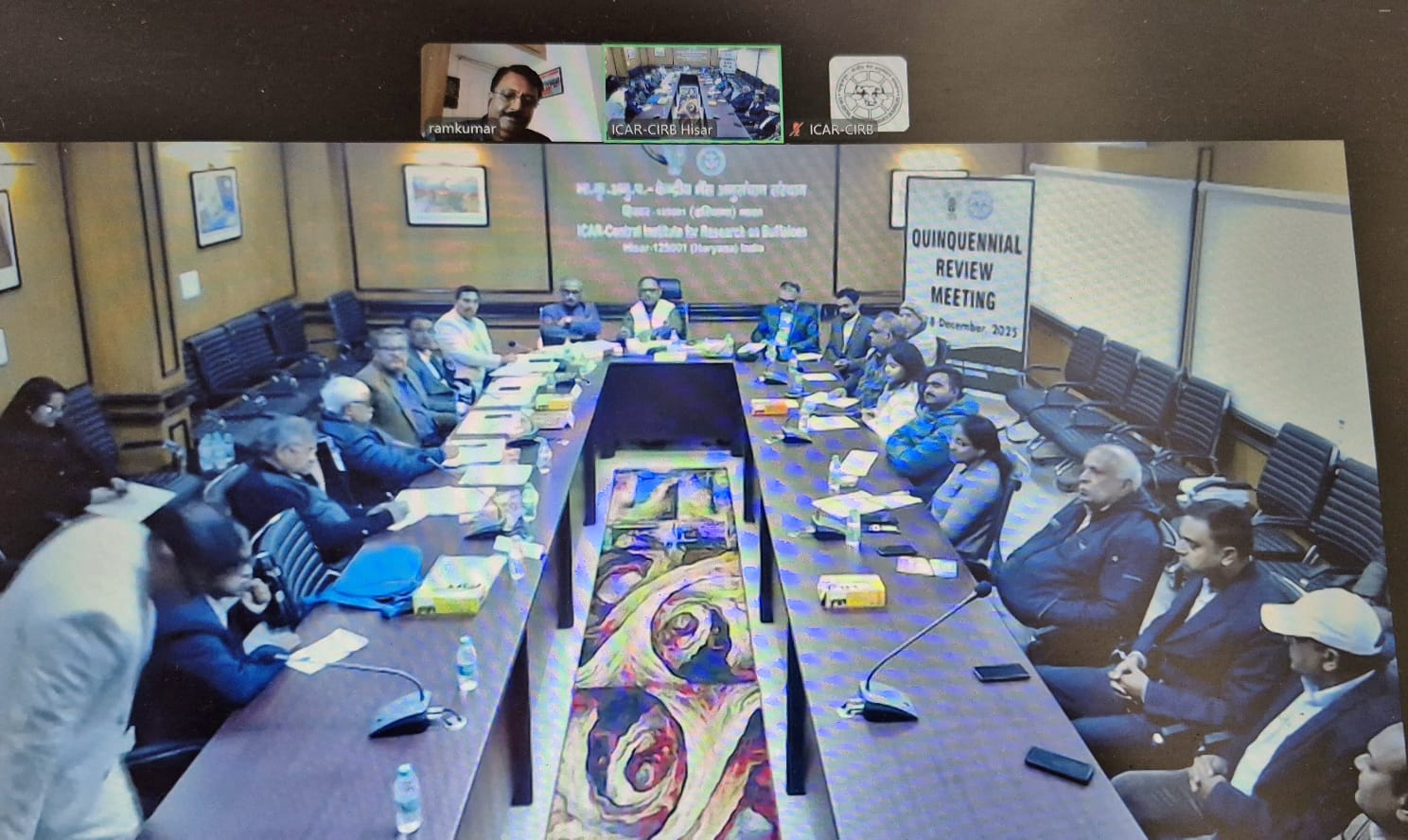
Participating as an expert member of the QRT Evaluation Committe of CIRG , ICAR

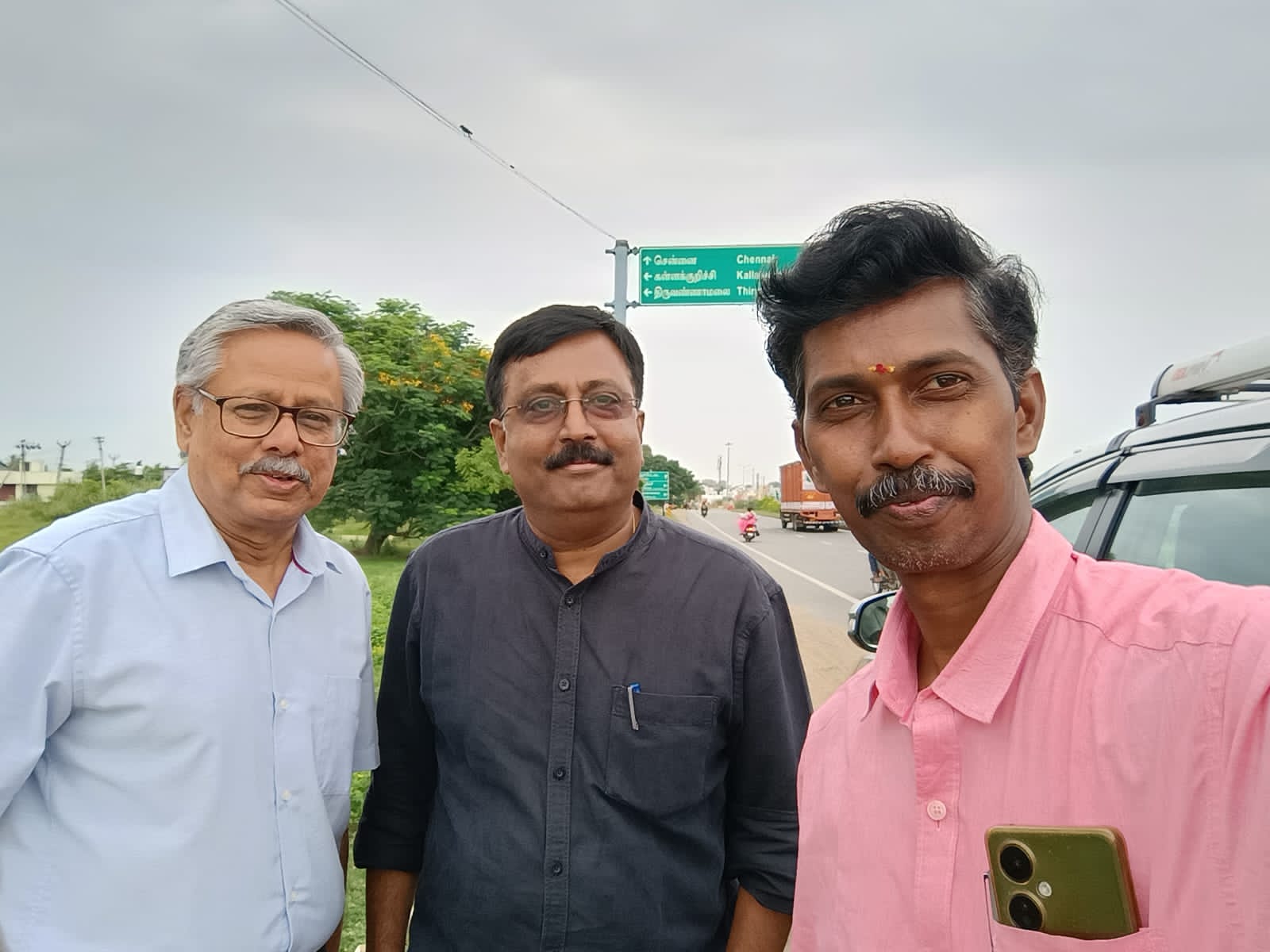
Formal field evaluation for Agricultural University of an innovation incubation at Kallakuruchi , Tamilnadu

WhatsApp Image 2025-05-04 at 11.42.16 AM

LASTING LOVE

STRANDOMS: the stray and random thoughts

MAY 5 ,2025

S.RAMKUMAR

LASTING LOVE

True Love is heart’s find of the beautiful virtues of another person.

While physical beauty might initially draw the eye, it is the enduring qualities of affection, sacrifice, and unwavering care that truly bind souls together.

These deeper virtues weave the fine fabric of a real and lasting love, with varying shades!

Share

475112741_10233451389539836_7000199147613697618_n

EDUCATION,Drowning in Examinations!

STRANDOMS: the stray and random thoughts

January 29 ,2025

Prof. S. Ramkumar

EDUCATION

EDUCATION,
Drowning in Examinations!

Where is the Education,
we have lost in Examination?
Where is the examination,
we have lost in entrance tests?

The heavy backpacks of school education cease to experience the joy of myriad of subjects that paints the Universe! The creativity of children gets dissolved in “conformity” of a class, to have the convenience of uniformity spread among all.

Every young mind is tuned into “examinations” and the “judgment- day” of results , from day one of their Schooling (from LKG). We are evolving ourselves into a society of dominant “examination system” that eclipses primary purpose of curiosity and joy of Education.

Make Education enjoyable, within the incessant examinations!
This is the challenge for good teachers and caring parents!
“Where is the wisdom we have lost in knowledge?
Where is the knowledge we have lost in information?”
                                                          -T. S. Eliot (1922)

Share

education

what education teaches

STRANDOMS: the stray and random thoughts

January 17 ,2025

Prof. S. Ramkumar

What Education teaches ..

Education teaches how not to fall, in Life!

Do not shoulder more, than minds can carry!
Education is the learning, to understand, explore, describe and control life.
Providing a situation of stress-free learning for children, opens up the mind of every student to joyfully aspire, and achieve their individual abilities.


May be an image of 1 person

Share

jeswin-thomas--hgJu2ykh4E-unsplash (1)

Examination Anxiety

Education

November 21,2021

Prof. S. Ramkumar

EXAMINATION ANXIETY

(The role of teacher revisited in the context of the transition from Online examination to Offline examination)

In the distorted life period of the pandemic, students have undertaken only Online examinations which were taken at home and had a different pattern of answering questions and now with schools and colleges reopening, it is back to the in classroom examinations. This is when the concerns of students, especially those who haven’t undergone an in-physical classroom examination for a long period, need to be genuinely and carefully addressed.

The classes of theory were largely or fully online, which had they’re own modifications in facilitating a situation that suited the pandemic situation (including technology like mobile phones, computers, signals, cost of mobile data..), This may not have been an ideal situation any student or teacher aspired for – but was good enough to help in the context of the world wherein the single prime motto was the control and prevention of the COVID 19 pandemic .
 
Considering the period from April 2020 to October 2021, students (and teachers) have been through various experiments mainly regarding teaching online and conducting examinations online. These have subject-wise specific opportunities and challenges.
Now, after repeated exposure to online examination there is a transition based on the COVID protocol, with colleges reopening and examinations being conducted in offline mode. There is a great responsibility vested with the Faculty in this period of “come back” to normalcy, to understand a student’s mind ; to get back from the ‘Solitary learner’ mode at home to real class room teaching and examinations.
 
The COVID-19 period has taught us that Education need not be equal to examination. It’s only a process of evaluation. However, this revival/transition period is now putting back examinations, in position as per the University directions. This transitory period for a student to face an offline examination needs to be empathetically understood.
 
We need to realize this as ‘teachers’ who need to adapt to support the feelings, ward off the worries, give direction and build confidence among students to write examinations in classroom mode. This is a great moral responsibility vested on us, by the unique time we have gone through and are going through.
 
From the online to classroom examination, the genuine anxiety should first be taken off from the minds of students. It’s time for us to handhold them to be confident first so that they can concentrate and start studying, rather than worrying on writing an examination and ‘passing it’.
 
The challenge for a teacher now is not the subject-matter; but the ‘subject”(student) to whom we taught largely in the online period, who have to be calmed. Also need to understand that an examination is not to find out what a student doesn’t know, but rather what a (s)he knows. This transition period is the apt context that highlights and reminds us of this responsibility.
 
I think considering the constraints of online teaching and earlier online examinations, setting of questions play an important role. We should remember that these are students who have been taught through the online mode, who are appearing for examinations. The fundamentals that a student should know should be a priority, rather than testing deep-knowledge.
 
Introducing question papers to students in short sessions, model tests, revision of subjects within an hour, skimming through the major titles etc. can build confidence in students to go ahead and appear for the offline exams, since they reassure students of the commitment and handholding of a teacher in supporting them.
 
Ultimately, when a student writes a classroom examination after a series of online exams during lockdown period, it’s only natural for them to have worries. Teachers need to focus on “subjects” (students) so as to help them deliver the subject matter.
With worries being helped to be warded away, students are sure to perform well in this period of recovery from the pandemic.

Share

element5-digital-OyCl7Y4y0Bk-unsplash (1)

Teachers: students make them!

STRANDOMS: the stray and random thoughts

August 7, 2017

Prof. S. Ramkumar

Education, Life 

Teachers: students make them!

Man-making or Nation-building , the teacher is the instrumental foundation and means. This is an attempt to crystallize the thoughts on becoming a good teacher, may it be in schools, Colleges, Institutes or Universities.
  1. Preserving the curiosity

Primary to PhD , the pristine element of a teacher is the same “creating and leading a learning environment”. However I feel the responsibility is more so with school teachers, especially primary and secondary schools. In fact after the family to which a child is born (the members of which are the first teachers of their life), the inquisitiveness of the child is to be kept alive and promoted by the primary teachers, the foundation builders. I remember Mother Prosperous who was more than a teacher to me when I was in my 2nd standard, whom I met after so many years after she became the Generalite, who recognized me as the child who persistently asked questions. I remember her as a patient listener lovingly trying to explain to a 7 year old on the myriads of life, quite incomprehensible at that age.

  1. Nothing less than a role model

“The classrooms shape the destiny of a country”- brings out the role of teacher inside a classroom. Teachers are creating the future society, a responsible a and continuous task. This demand that there is nothing less than a role model expected from a teacher. This attributes great responsibility and sense of satisfaction for a teacher. Students learn what you do, not necessarily what you teach or say (except a subject taught). It’s not what is being taught that the children learn; its you they learn!

  1. Connecting to every student

Every learner, ( irrespective of the varying capacities we attribute to them) should feel that (s)he is being cared by the teacher. Classrooms should not be a generic totality of “one teacher” to “collection of students”(we do not have a collectivity name of a collection of learners like the pack of hounds or murder of crows, which can remind a teacher that each learner is unique with potentials of thinking and reasoning )); rather it has to emulate the feeling of “one teacher” to “each student”. This connectedness to each student is vital to create interest and involvement of students. The method of linking to each student involves innovations on creativity of connectedness on the part of teacher. Think a situation that every student feels that the teacher is his or hers!

4.Teaching doesn’t happen in vacuum

Every student or learner (an infant child to an old person; poor or rich; literate or illiterate) have a knowledge set of his own. Teaching is a process of sharing between two sets of knowledge, which is essentially communication. This should start by understanding and respecting this knowledge.

  1. Teaching to prepare for life: the litmus test : Teacher need to realize his/her role in a wider context to position himself or herself. Teaching cannot be measured in terms of the books or compositions corrected, examination papers set or answer books evaluated or the number of hours or periods spend in a class or laboratory (though all these are needed!). It is the qualitative change that has been brought out among the students in the “learning for life” that decides the result of teaching. The disciplines or subjects we try to transfer knowledge about are one of the tools effecting this change. Any subject for that matter is important, a tool that should be used in a wider understanding of purpose of education by a teacher. It has a lot to do with fitting into the setting, culture or heritage. “ Education is the perfecting of life- the enrichment of the individual by the heritage of the race. Let this vital process of transmission and absorption be interrupted for half a century, and civilization would end, our grandchildren would be more primitive than savages” Will Durant: 2014 “Fallen Leaves: last words on Life, Love War and God”. Swami Vivekananda’s advice as “ Education is the manifestation of perfection already in man”, is relevant and simple in making realize the role of a teacher to bring out the best in a child, which is already there. Any subject we teach is an opportunity for this.
  2. Being a Pansophist : Comenius, the famous educationist of the 17 century (sometimes named as Father of Modern education) had his concept of philosophy of “pansophism” which related to education for everyday life and called for a systematic relationship to be developed for all knowledge ( as against the conventional encyclopedic teaching”). He advocated teaching in the common or vernacular language of students rather than in Latin (in his place at that time!), and the establishment of a universal system of education with opportunities that included women and people of all nations. Interestingly India has preached one form of this as Vasudhaiyva Kudumbakom ( the vedic concept of world is a family). Pansophism would make a learner capable of wisdom in any subject and be “able to see any subject in relation to others”. (Robert. R. Rusk: The doctrines of the great educators: 1954). Teachers need to be attempt to be pansophists, at least to the extent that is possible.
  3. Teacher in the digital environment :As teaching undergoes changes, one of the new and powerful entrants to the field is the “Digital environment”. Actual learning happens now, as in earlier times in family, school and society. But one of the influential factor in all these is the digital teacher. The teachers need to rationalize the application of these for children giving them the opportunity to experience both the virtual and real. Teachers cannot take this as a matter of convenience or inconvenience. It’s a matter of opportunity , the ultimate aim is making the children fit for a successful life within a technology-led day of the present. The world has been so, applying the teachings of the day – logic, religion, science or – from Plato to Dr Abdul Kalam!

Share

nordwood-themes-zNS6oFkwlG4-unsplash

2018: the take away – part 1

Education

December 9, 2018

Prof. S. Ramkumar

EXAMINATION ANXIETY

(The role of teacher revisited in the context of the transition from Online examination to Offline examination)

In the distorted life period of the pandemic, students have undertaken only Online examinations which were taken at home and had a different pattern of answering questions and now with schools and colleges reopening, it is back to the in classroom examinations. This is when the concerns of students, especially those who haven’t undergone an in-physical classroom examination for a long period, need to be genuinely and carefully addressed.

The classes of theory were largely or fully online, which had they’re own modifications in facilitating a situation that suited the pandemic situation (including technology like mobile phones, computers, signals, cost of mobile data..), This may not have been an ideal situation any student or teacher aspired for – but was good enough to help in the context of the world wherein the single prime motto was the control and prevention of the COVID 19 pandemic .
 
Considering the period from April 2020 to October 2021, students (and teachers) have been through various experiments mainly regarding teaching online and conducting examinations online. These have subject-wise specific opportunities and challenges.
Now, after repeated exposure to online examination there is a transition based on the COVID protocol, with colleges reopening and examinations being conducted in offline mode. There is a great responsibility vested with the Faculty in this period of “come back” to normalcy, to understand a student’s mind ; to get back from the ‘Solitary learner’ mode at home to real class room teaching and examinations.
 
The COVID-19 period has taught us that Education need not be equal to examination. It’s only a process of evaluation. However, this revival/transition period is now putting back examinations, in position as per the University directions. This transitory period for a student to face an offline examination needs to be empathetically understood.
 
We need to realize this as ‘teachers’ who need to adapt to support the feelings, ward off the worries, give direction and build confidence among students to write examinations in classroom mode. This is a great moral responsibility vested on us, by the unique time we have gone through and are going through.
 
From the online to classroom examination, the genuine anxiety should first be taken off from the minds of students. It’s time for us to handhold them to be confident first so that they can concentrate and start studying, rather than worrying on writing an examination and ‘passing it’.
 
The challenge for a teacher now is not the subject-matter; but the ‘subject”(student) to whom we taught largely in the online period, who have to be calmed. Also need to understand that an examination is not to find out what a student doesn’t know, but rather what a (s)he knows. This transition period is the apt context that highlights and reminds us of this responsibility.
 
I think considering the constraints of online teaching and earlier online examinations, setting of questions play an important role. We should remember that these are students who have been taught through the online mode, who are appearing for examinations. The fundamentals that a student should know should be a priority, rather than testing deep-knowledge.
 
Introducing question papers to students in short sessions, model tests, revision of subjects within an hour, skimming through the major titles etc. can build confidence in students to go ahead and appear for the offline exams, since they reassure students of the commitment and handholding of a teacher in supporting them.
 
Ultimately, when a student writes a classroom examination after a series of online exams during lockdown period, it’s only natural for them to have worries. Teachers need to focus on “subjects” (students) so as to help them deliver the subject matter.
With worries being helped to be warded away, students are sure to perform well in this period of recovery from the pandemic.

Share

vasily-koloda-8CqDvPuo_kI-unsplash

Success as a student

STRANDOMS: the stray and random thoughts

17 December 2017

Prof. S. Ramkumar

Education

Success as a student

This is an excerpt of a few points that I shared in my address to the students of Veterinary science after taking charge as Dean of Rajiv Gandhi Institute of Veterinary Education and Research (RIVER) Puducherry, recently. Thought it may have relevance to any college student. There is a greater role for teachers if the students need to follow these!

Being a college student is an opportunity blessed to you all. Many are there who couldn’t make it to a college. Whether by choice or by chance you are into an amazing subject of study.

You should first feel that you are fortunate and privileged to enter into the subject domain you have been offered.

Use the time of your study period, to learn about yourself and your capacities in addition to the subject you study.

Understanding you – your abilities and strengths- is impor

tant since your success in life depends on matching these abilities to the subject you are studying and delivering your service.

I consider the following 4Cs as the vital factors that will shape a student successful and useful to the Society and the Nation.

  1. Competence: it changes depending on the graduate course you have chosen.

1.1 Professional skills: For eg. In Veterinary Science the student who passes out after the five and half years course should have Day-one competency skills as stipulated by the Veterinary council of India.

1.2 Social skills: Irrespective of the courses, the students should develop skills understanding, analysing and approaching social issues.

1.3 Soft skills: Abilities to improve communication-spoken and written, basic language abilities in English, in addition to the mother-tongue or other languages, facing an interview, writing a CV, building confidence.

  1. Compassion: Understanding clients, patients or people for whom (s)he has to work for. The empathy and realisation of the conditions and problems of the society helps us to deliver the subject (or knowledge) in a fuller manner, making education more meaningful. It takes us one step towards Wisdom.
  2. Creativity: Whatever may be the subject of study, students need to learn innovating and improvising. Once they receive the certificate and start working with the world, they realise that many things and thoughts have to be modified. College should be the place where they should get experience for that. They should reinvent curiosity (in case they have forgotten it), which takes them through originality and finally creativity.
  3. Connectivity. The present day order is connectivity, like our globe rotates around its axis, connectivity is the axis on which our lives revolve. Instant Information is the key mantra of the human civilization of the present day. Whether its the internet, social media or whats app, connect wisely. Technology is neutral; it is the people who apply or use them who distort the neutrality or usefulness. Creating connections lets you grow more useful to the society.

We have a dominant examination system compared to the education system. Need to respect it. However if you get less marks please don’t think it is the end of the world. Don’t start worrying. Instead, find out why you got less marks and try to address it next time. There is always a good next time, provided you don’t get stressed and worried.

Believe in yourself and that will surely lead to confidence.

The Degree certificate that you receive is a testimony of the knowledge of the subject that you have undergone. It’s a license to enter into the real world, where real learning starts.

Be prepared for the cycle of “Learn- Unlearn- Relearn” continuously for a successful life.

Share